Small-lot geometry makes Englewood sewer work its own discipline
Englewood lots are narrow and shallow, houses sit close to the street, and a great many laterals run to a main in the alley rather than out the front. That geometry means shorter runs, which is good, but also tight access, detached garages sitting on top of the line, and mature trees squeezed into every available parkway strip.
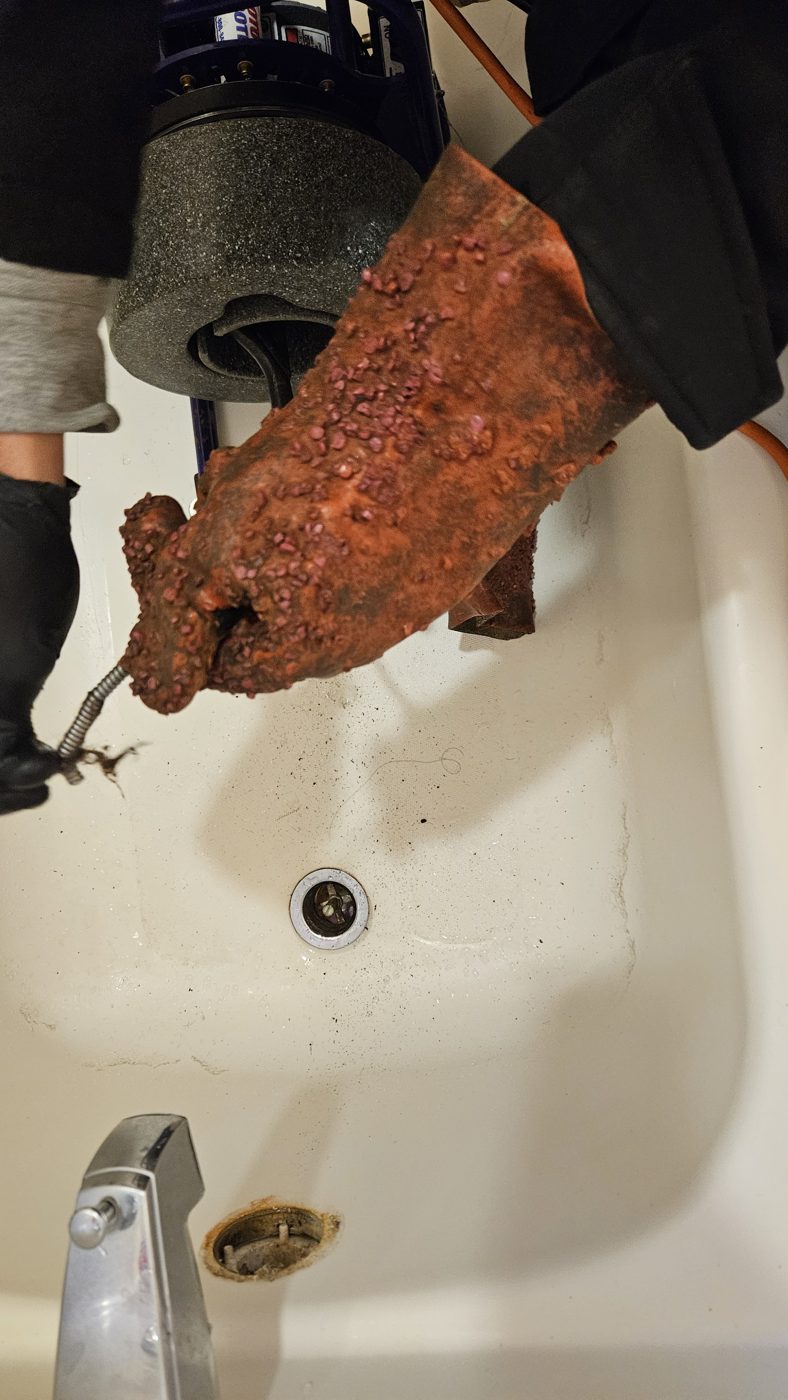
The pipe itself is mostly vitrified clay from the 1920s through the 1950s, with cast iron inside. Those materials do not fail randomly — they fail at joints and at scale, on a schedule you can predict once you have seen footage. Aurora Drainage Service cameras every main line clearing in Englewood for exactly that reason.
Alley mains and where responsibility actually sits
Your responsibility typically runs from the house to the connection at the public main, even when that main is in the alley behind a neighbour's garage. Knowing the length and route of your own lateral before a problem arrives is worth more in Englewood than almost anywhere else in the metro.
Lines running under detached garages
Very common here. It is not a problem until a repair is needed, at which point it changes the cost significantly — which is a good reason to maintain rather than defer on a line in that position.
Parkway trees and the city's role
Street trees in the parkway strip are often municipal, but the roots that enter your lateral are still your blockage. Root cutting and jetting on a regular interval is the practical answer.
Cast iron stacks in two-storey Englewood homes
Interior cast iron narrows from scale long before it blocks. If every fixture in the house drains slowly rather than one, the stack rather than the lateral is usually the culprit, and jetting rather than cabling is what restores the bore.
The parts of Englewood we work in every week
Both Englewood ZIP codes, 80110 and 80113, are on our regular rotation: Old Englewood and the residential grid around Cushing Park and Duncan Park, the South Broadway commercial strip and the Gothic Theatre block, the CityCenter district, Belleview Park on the south edge, and the medical district around Swedish Medical Center.
The Broadway and Hampden corridors bring us a steady mix of small-restaurant grease lines and older mixed-use buildings where residential units sit above commercial kitchens on a shared drain.
Mixed-use buildings with residential above commercial
When a ground-floor kitchen and upstairs apartments share a stack, a grease blockage becomes everyone's problem simultaneously. We clear from the accessible point, camera the shared run, and give the owner footage that shows exactly where the accumulation is.
Common Englewood service requests
Root cutting on clay mains is the everyday job, usually presenting as a basement floor drain that backs up when the washer empties. Kitchen line jetting is next, and cast iron stack cleaning is a close third in the taller Old Englewood houses.
We also do a lot of small-commercial work here. Englewood's independent restaurants tend to have older buildings and undersized grease handling, and a scheduled jetting interval is dramatically cheaper than a Saturday-night shutdown.
Rental duplexes and fourplexes
Englewood has a high share of small multi-family. Owners get a written summary and footage after every visit, which makes it far easier to tell a genuine pipe defect from a tenant-habit problem.
Investor and flip inspections
Before a rehab budget is set, scope the lateral. Discovering a collapsed clay section after the kitchen is installed is the most expensive possible ordering of that work.
The way an Englewood call is handled
Someone answers 720-779-4946 whatever the hour, takes the symptom and address, and gives an honest window. On site the technician finds the access point, lays protection, confirms the agreed price and clears the line.
Then the camera goes down and you watch your own pipe. Inspection is included with main line clearing and the footage stays with you.
Tight-access work in narrow Englewood side yards
Equipment routing matters when the side yard is four feet wide. We plan the path before anything is unloaded so hoses and cables are not dragged through the house unnecessarily.
Where the cleanout usually hides
Often near the rear of the house on the alley side, sometimes buried under turf or a later concrete pour. We locate rather than guess.
Adding a cleanout where none exists
On pre-war Englewood homes this is frequently the single best small investment, because it converts every future service call into outdoor work.
Groundwater near Little Dry Creek and seasonal timing
Parts of Englewood sit low relative to the Little Dry Creek and South Platte drainages, and spring runoff raises groundwater enough to infiltrate clay laterals with open joints. Infiltration carries silt, and silt settles wherever the grade flattens — usually right where the roots already are.
Our Englewood emergency volume peaks in late spring for that reason and again in midwinter when grease sets. A root cut scheduled in early spring is the single most effective preventive move available to an Englewood homeowner with a clay lateral.
Older shallow laterals and freeze depth
Some 1920s Englewood laterals sit shallower than modern code would allow. Shallow pipe cycles through more freeze-thaw movement each winter, which is part of why joints here separate faster than the material's age alone would predict.
Englewood pricing without the surprise
Cost depends on the line, the access, the tool and the hour. You get the figure before work starts, and HD camera inspection comes with main line clearing at no separate charge.
If the honest answer is a root cut and a jet, that is the invoice. If the footage shows a collapsed or badly offset clay section, we show you the frame and explain the repair options in cost order. Aurora Drainage Service answers at 720-779-4946 twenty-four hours a day.