Two cities in one, and two sets of sewer problems
West of Highway 2, the original Commerce City neighborhoods date to the 1940s and 1950s, with clay laterals, mature street trees and the root intrusion that combination always produces. North and east, Reunion, Buffalo Run and Belle Creek are twenty-first-century construction on PVC, where the problems are grease, wipes and soil settlement rather than pipe failure.
Getting the diagnosis right depends entirely on knowing which Commerce City you are calling from. Quoting root cutting on a Reunion lateral is as wrong as quoting a grease jetting package for a 1948 house with a root mass at forty feet. Aurora Drainage Service cameras the line in both cases, because the footage decides the work rather than the other way around.
Older Commerce City: clay, cottonwoods and root cutting
The original grid was planted with fast-growing shade trees that are now seventy years old and standing directly over clay joints. Annual or biennial root cutting is genuinely cheaper than the basement cleanup it prevents.
Cast iron inside the house
Homes of that era often still have cast iron stacks and branch lines, which scale internally and narrow the pipe long before anything actually blocks. Camera footage shows the scale clearly and tells you how much diameter you have left.
Cleanouts that were never installed
Some houses in the original neighborhoods have no exterior cleanout at all. We can work from a roof vent or pulled toilet when we have to, but we will also tell you what adding a proper cleanout costs, because it pays for itself on the second visit.
Newer Commerce City: settlement and expansive soil
Reunion and Buffalo Run were built on ground that swells and shrinks dramatically with moisture. Where backfill compaction was marginal, a section of lateral settles into a shallow belly that holds water permanently and drops solids at that low point.
Industrial corridors, warehouses and restaurant kitchens
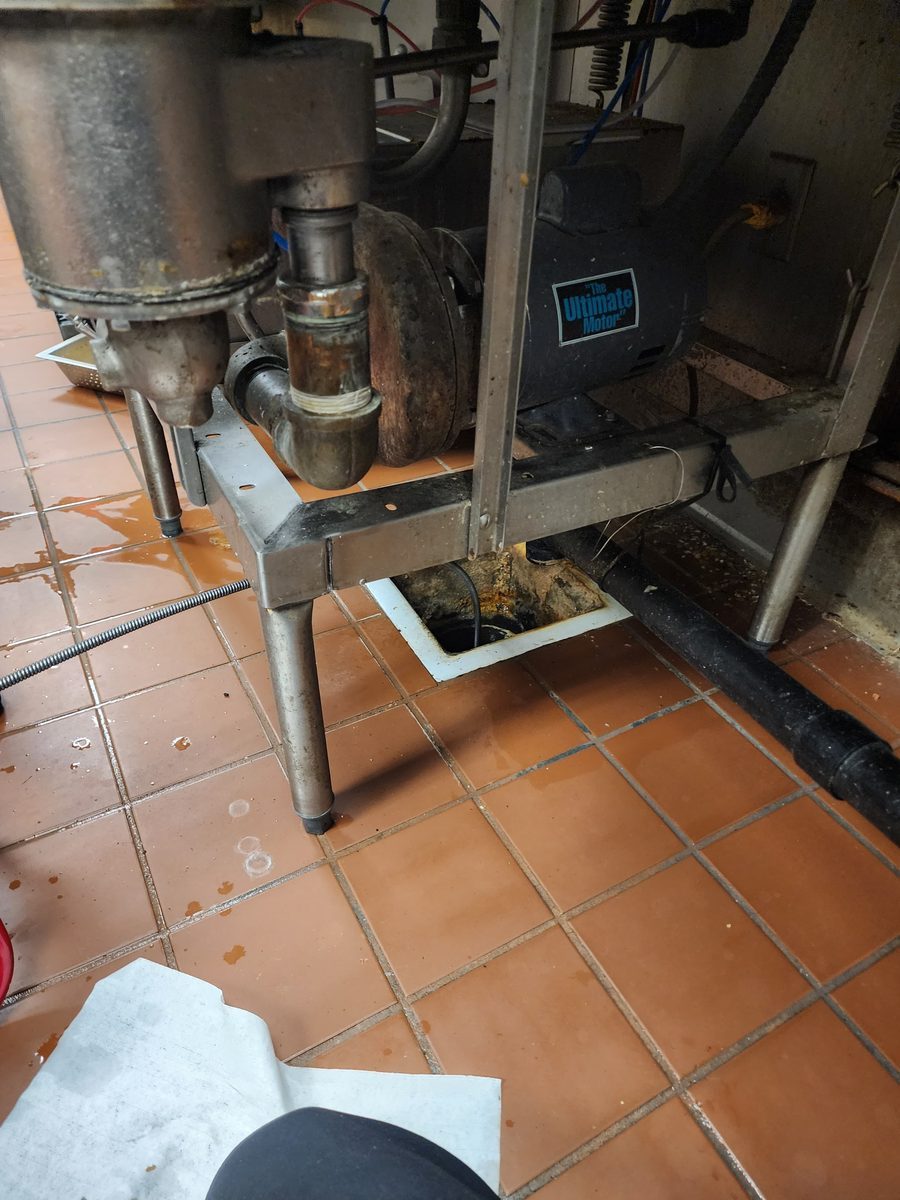
Commerce City has one of the densest concentrations of light-industrial and food-service property in the metro, and their building drains take punishment no residential line ever sees. Wash-down water carries grit and sand, kitchen lines carry grease in volume, and shop floors add solids that settle out and stay put.
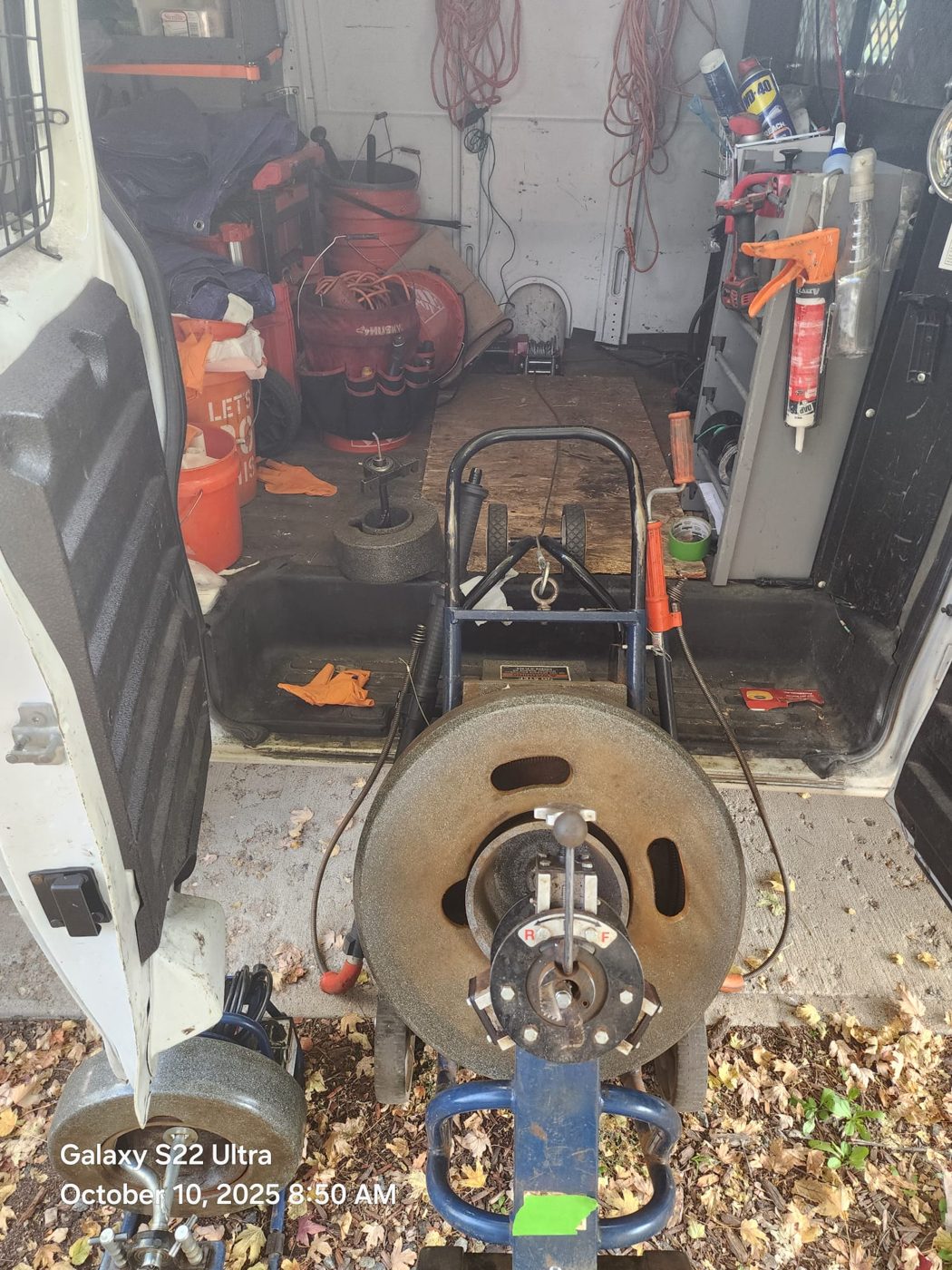
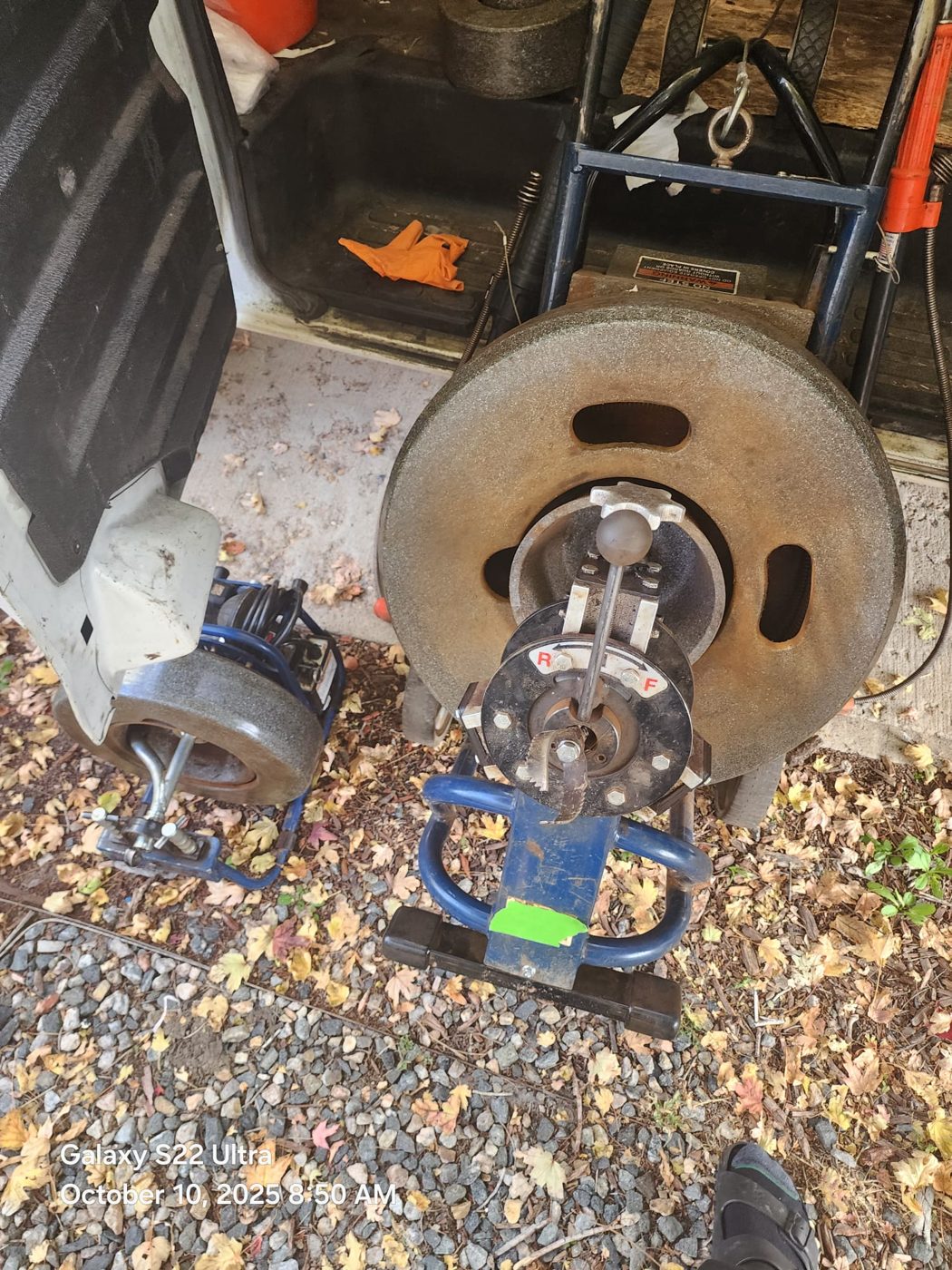
Grit is the key difference. A cable passes straight through a settled sand layer without moving it, which is why a commercial line can be cabled repeatedly and still slow down within weeks. Hydro jetting moves grit; cabling does not. On these properties we recommend a jetting interval based on actual usage rather than waiting for a shutdown.
Grease interceptors and the line downstream of them
An interceptor only protects the pipe beyond it if it is being pumped on schedule. When it is overdue, grease carries straight through and coats the building drain, and that is the call we usually get first.
Scheduling around operating hours
Restaurants and shops cannot lose a service day. We schedule jetting overnight or between shifts wherever the property allows, which is a large part of why we run 24 hours.
What Commerce City calls us out for
Residentially, main line root cutting with camera inspection dominates in the older neighborhoods, while kitchen branch jetting and wipe-related main line blockages dominate in the newer subdivisions. Commercially, it is grease line jetting, floor drain clearing and building drain maintenance.
We also do a steady volume of pre-purchase sewer scopes in the original neighborhoods, where a buyer needs to know whether a seventy-year-old clay lateral is a maintenance item or a replacement waiting to happen.
Rental and investor-owned property
Every visit produces footage and a written summary, which lets an owner who is not on site approve or decline a repair on evidence rather than a phone description.
Multi-unit buildings and shared stacks
In older duplexes and small apartment buildings, one blocked stack takes several units out simultaneously. Those get priority routing because the disruption multiplies by the hour.
How the appointment works in Commerce City
A person answers 720-779-4946 at any hour. We take the symptom, the address, the property type and an access note, then give an arrival window we can hold. The price is confirmed on site before anything comes off the truck.
Flow gets restored first, then the camera goes in and we walk the footage with you. HD inspection is included with main line clearing and the recording is yours.
Locating the line under old and new construction alike
In the original neighborhoods the cleanout may be buried under decades of added landscaping or a later concrete pour. In the new subdivisions it is usually exactly where the plans put it. Either way we locate electronically rather than digging to find out.
Distance to defect, recorded
Every finding gets a footage mark, so a future repair is one targeted excavation rather than a row of exploratory holes.
Protecting interior finishes
Coverings go down on any route equipment takes through the building, residential or commercial.
Adams County soil, wind and the Commerce City seasonal pattern
The open ground north and east of Denver dries hard through summer and takes on water quickly in spring, and that swing works on pipe joints continuously. Older clay joints open a fraction and roots move in; newer plastic runs shift enough to deepen an existing belly.
That produces two annual peaks. Spring brings main line calls as soil saturates and root growth accelerates. Late autumn and winter bring kitchen and grease calls, residential and commercial alike, as cooking volume rises and grease sets against cold pipe. Both are far cheaper to schedule in advance than to respond to.
Irrigation and wash-down water above the line
Whether it is a lawn sprinkler zone or a commercial wash-down pad, water landing directly above the lateral keeps that soil unstable year-round. Redirecting it is free and reduces the joint movement your pipe has to absorb.
Pricing for Commerce City homes and businesses
Four things set the number: which line is affected, how accessible the cleanout is, whether the work needs cabling or hydro jetting, and the hour. You approve the price before work starts, and camera inspection comes with main line clearing.
For commercial properties we can quote a recurring jetting interval instead of one-off emergency response, which is almost always the cheaper way to run a kitchen or a warehouse. Aurora Drainage Service answers 720-779-4946 all day and all night.