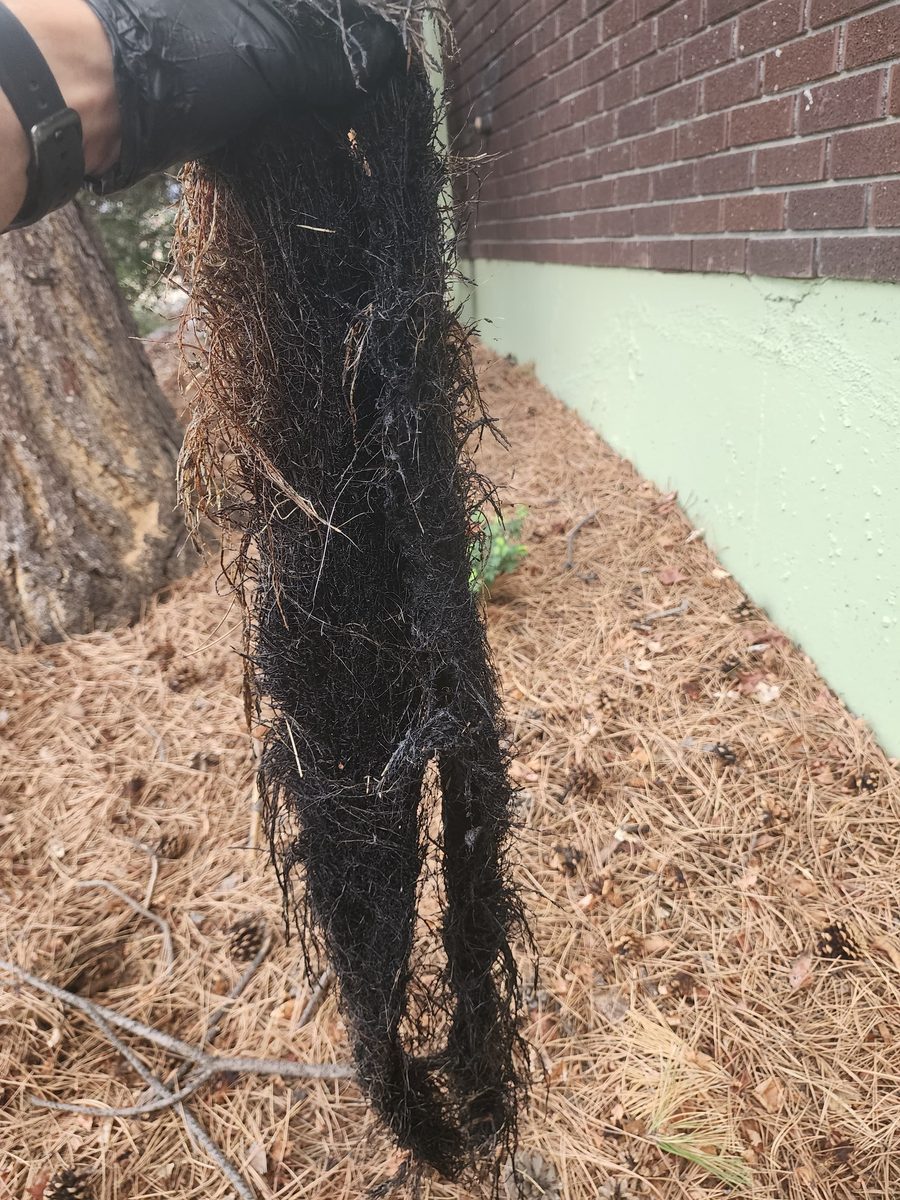
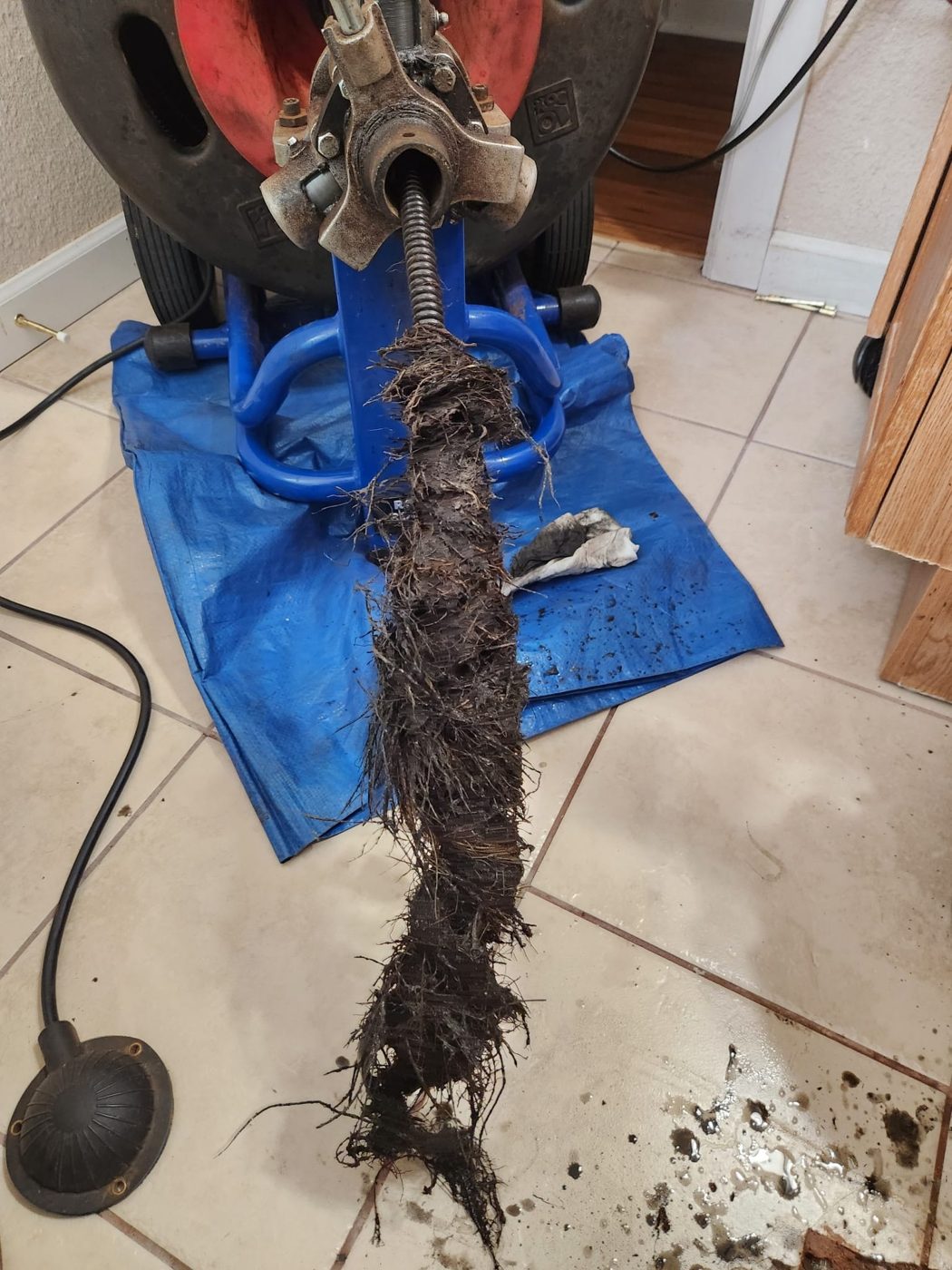
A century-old lateral under a hundred-year-old canopy
Most Washington Park housing dates from roughly 1900 to 1940, and the sewer lateral serving it is typically the original vitrified clay tile, laid in short sections with mortared joints. Clay is a durable material and plenty of those runs are still structurally sound, but the joints were never watertight and were never intended to be. They weep a small amount of moisture into the surrounding soil continuously.
Above that pipe stand elms, cottonwoods and silver maples planted when the neighborhood was laid out. In a semi-arid climate, a weeping sewer joint is the most dependable water source on the block, and a root system will travel a remarkable distance to reach it. Once a hairline root enters a joint it thickens inside the pipe, forms a net across the flow, and catches everything the household sends down. Aurora Drainage Service cameras every Wash Park main line it clears, because the footage tells you whether you are managing roots or approaching a failure.
Why the same house needs cutting again
Cutting removes the root mass inside the pipe but not the tree. As long as the joint stays open and the tree stays alive, regrowth is inevitable. The useful question is not how to stop it permanently but how long your particular line goes between cuts, and footage answers that.
Cutting versus jetting on a rooted clay line
A mechanical cutter shears the mass back to the pipe wall. A jetting pass afterward flushes the debris out rather than leaving it downstream to reassemble. On rooted laterals we normally do both.
When roots signal a bigger problem
A single entry point is maintenance. Roots entering at six consecutive joints usually means the run has shifted, and at that point the conversation changes from cutting to lining or replacement.
Offsets and the settling that comes with age
Ground that has been saturated and dried for a hundred years moves, and clay sections shift out of alignment at the joints. An offset catches paper the way a step catches leaves, and it shows plainly on camera at a recorded distance.
The Wash Park blocks and the streets around the park
We work both sides of the park: West Washington Park toward Broadway, East Washington Park toward University, the blocks around Smith Lake and Grasmere Lake, the South Gaylord Street shops, Old South Pearl Street, and the Platt Park, Bonnie Brae and Cory-Merrill borders.
Wash Park is a straight run west from our Aurora base. Same-day appointments are standard here and overnight emergencies are worked overnight rather than deferred to the next business day.
The South Gaylord and South Pearl restaurant blocks
Small commercial kitchens in century-old buildings run grease through building drains of the same era. Those lines want a jetting interval and out-of-hours scheduling, because a mid-service blockage costs far more than the maintenance would have.
What Washington Park homeowners call about
Main line root cutting with camera inspection is far and away the leading job here, followed by hydro jetting on lines narrowed by decades of buildup, followed by sewer scopes for buyers who understand that in this neighborhood the lateral is a material part of the purchase.
There is also steady demand for scheduled maintenance. Owners of restored bungalows with finished lower levels tend to work out quickly that a planned annual cut is dramatically cheaper than one flood, and they book it rather than wait.
Pop-tops, scrapes and added load
A great many Wash Park homes have been expanded upward or rebuilt behind an original facade. Every added bathroom pushes more through the same century-old lateral, which is why a line that coped for eighty years starts failing after a renovation.
Buying in 80209 without a scope is a gamble
Offsets, root mats and bellies are routine findings on these laterals. Each one is a number, and a number found before closing is a negotiation rather than a surprise.
How the appointment runs in Wash Park
Call 720-779-4946 and a person answers at any hour. We take the symptom, the address and an access note, then give an arrival window we can hold. The price is confirmed on site before anything comes off the truck.
We restore flow first, then camera the line and walk the footage with you, distance markers and all. HD inspection is included with main line clearing and the recording is yours to keep or hand to a contractor for a bid.
Cleanouts, alleys and tight historic lots
Many of these houses were built before an exterior cleanout was standard, and where one was added later it is often buried under decades of landscaping. We locate electronically, and if there genuinely is no cleanout we explain what adding one costs before doing anything intrusive.
Protecting restored interiors
Original hardwood and restored trim get covered before any equipment crosses them. Wherever an exterior access point exists, the work stays outside.
Alley-side access
Much of the neighborhood is alley-served on narrow frontage, so we plan truck positioning ahead of arrival to avoid blocking neighbours.
Denver's climate swing and the Wash Park seasonal curve
The clay soil under these blocks swells with spring moisture and contracts through the dry late summer, and a century of that cycle is exactly what has pulled clay joints out of alignment. The park's irrigation and the neighborhood's heavy tree cover keep root activity higher here than in most of the city.
The pattern is consistent: a spring surge of main line calls as roots push new growth into saturated joints, and a winter surge of kitchen line calls as grease sets against cold pipe in unheated crawl spaces. A cut booked in March and a jetting pass in November convert both surges into scheduled visits.
What you can control
You cannot move a hundred-year-old street tree, but you can keep irrigation from soaking the ground directly above the lateral, keep grease out of the kitchen line, and keep wipes out of the toilet entirely. Those three things measurably lengthen the interval between cuts.
Clear pricing for Washington Park
Cost is set by which line is affected, how accessible the cleanout is, whether the job needs cabling, cutting or hydro jetting, and the hour of the call. The number is agreed before work starts and camera inspection comes with main line clearing.
If the footage shows the line has moved past maintenance into genuine failure, we show you the frame and the distance and lay out the repair options from least expensive upward, including lining where the pipe qualifies. Aurora Drainage Service answers 720-779-4946 day and night.