Post-war Aurora, and the pipe that came with it
The neighborhoods along Delmar Parkway were built out through the late 1940s and 1950s, largely as housing for Fitzsimons and the growing city around it. The sewer laterals laid then were vitrified clay tile in short sections with mortared joints, which was the correct material for the era and has lasted far longer than anyone expected.
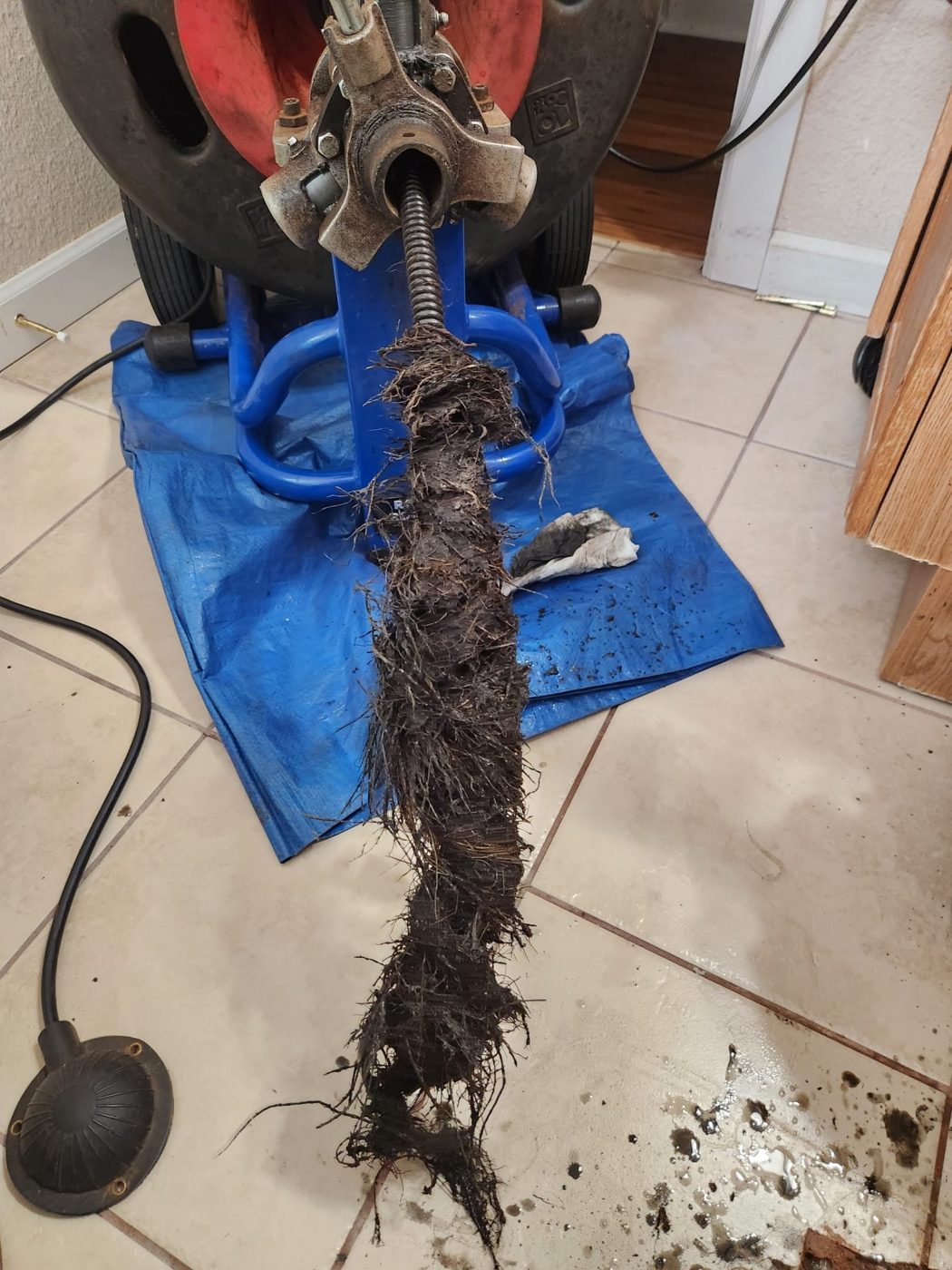
It has not lasted intact, though. Seventy years of Colorado freeze-thaw and expansive clay soil has shifted those short sections against each other, and the parkway's mature elms and cottonwoods have spent the same seventy years growing over the top of them. Root intrusion here is not an occasional finding; on pre-1960 blocks it is the default. Aurora Drainage Service cameras every main line it clears along the corridor, because the useful question is not whether roots are present but how far the pipe has moved.
Reading the difference between roots and a failing pipe
Roots entering one or two joints is maintenance and cuts cleanly. Roots at many consecutive joints, or an offset where one section has dropped below the next, means the run itself has shifted and the conversation moves from cutting to lining or replacement.
Cut, then jet
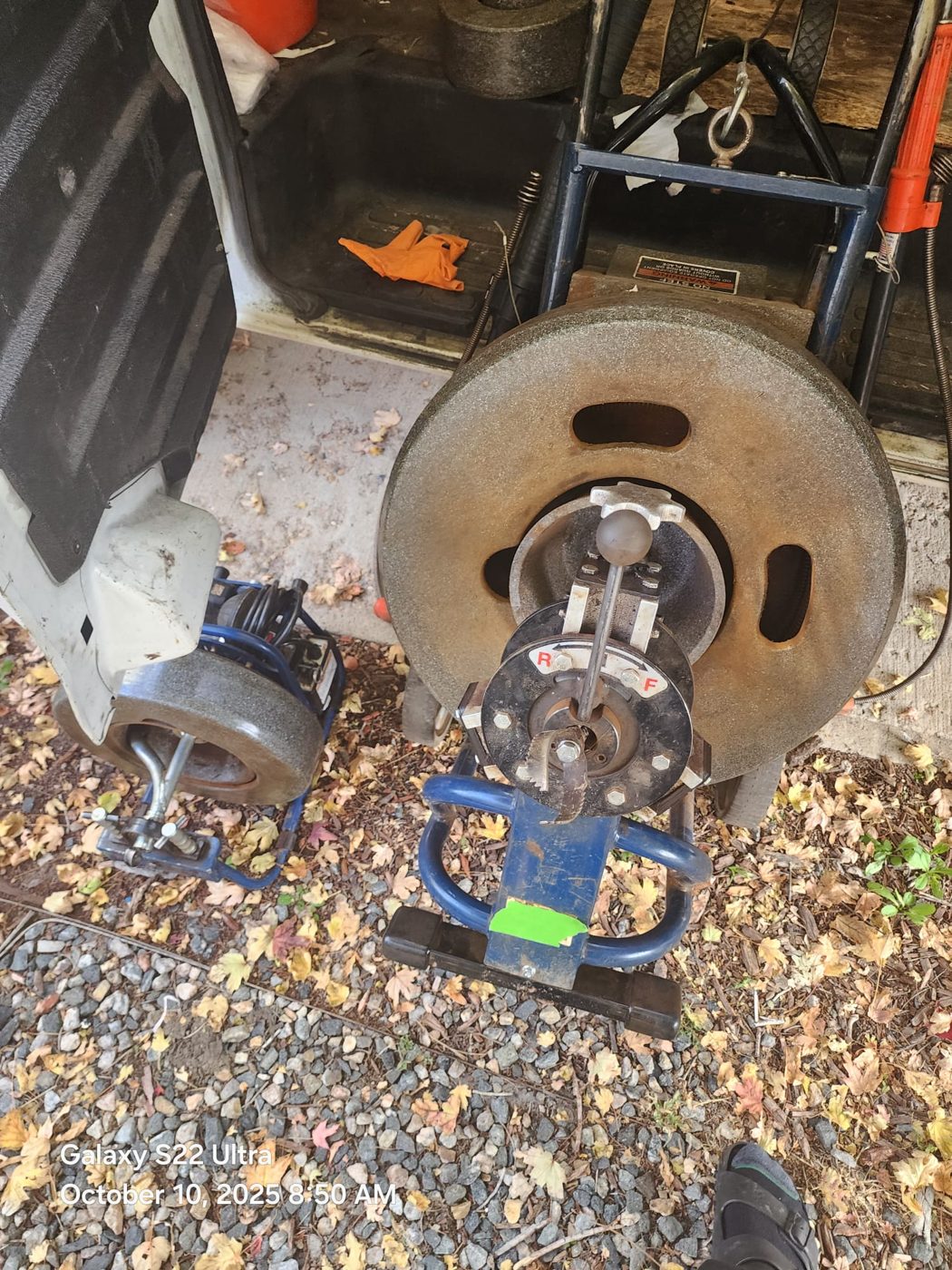
The cutter shears the mass back to the pipe wall; the jetting pass flushes debris out so it does not simply re-form downstream. On these laterals we usually do both in one visit.
Cast iron inside the house
Houses of this age often still run cast iron stacks and branch lines. Scale builds on the inside and narrows the pipe for years before anything actually blocks, and it shows clearly on camera.
Homes that never had an exterior cleanout
Cleanouts were not universal in 1950s Aurora construction. Where none exists we can work from a roof vent or a pulled toilet, but we will also tell you what adding a proper cleanout costs, because it pays for itself the second time you need service.
The corridor and the north Aurora blocks around it
We cover the Delmar Parkway corridor itself and the surrounding Del Mar, Hoffman Heights, Highland Park and Morris Heights neighborhoods, north to the East Colfax corridor and the Stanley Marketplace area, and west toward the Fitzsimons and Anschutz Medical Campus district.
This is our home city and among the shortest drives on our board. Same-day appointments are routine here and overnight emergencies are worked overnight rather than pushed to the next business day.
Small business and restaurant lines on East Colfax
Independent kitchens along the corridor operate in buildings of the same era as the housing, with building drains to match. Those lines want a scheduled jetting interval and out-of-hours work, both of which we handle.
What Delmar Parkway households call about
Main line root cutting with camera inspection dominates, followed by hydro jetting on lines narrowed by decades of accumulation, followed by branch line clearing in kitchens and bathrooms where old cast iron has scaled down to a fraction of its original bore.
Sewer scopes for buyers are the fastest-growing part of the work here. A seventy-year-old clay lateral is a genuine variable in what a property is worth, and finding an offset before closing is a negotiation instead of a surprise.
Rentals and investor-owned houses
There is significant rental stock along the corridor. Every visit produces footage and a written summary so an owner who is not on site can decide from evidence rather than a tenant's phone description.
Annual cuts as the cheaper path
Once a clay lateral is confirmed rooted, a planned yearly cut costs a fraction of one basement cleanup and happens on a weekday morning rather than at 1am on a holiday weekend.
How a Delmar Parkway service call works
Call 720-779-4946 and a person answers at any hour. We take the symptom, the address and an access note, then give an arrival window we can actually hold. Price is confirmed on site before any equipment comes off the truck.
Flow gets restored first, then the camera goes in and we walk the footage with you with distances marked. HD inspection is included with main line clearing and the recording is yours to keep or hand to a contractor for a bid.
Locating access on a mid-century Aurora lot
Where a cleanout exists it is often buried under seventy years of added landscaping, patios and re-graded lawn. We locate electronically rather than digging to find out.
Protecting the interior on older floor plans
These are small houses with tight hallways. Coverings go down on every surface equipment crosses, and wherever exterior access exists the work stays outside entirely.
Recording distance to every defect
Distance marks turn a future repair into one targeted excavation rather than a line of exploratory holes across a small front yard.
Freeze-thaw, old trees and the corridor's seasonal curve
Aurora's expansive clay swells with spring moisture and shrinks hard through late summer, and along Delmar Parkway that cycle has been working on the same joints since the Eisenhower administration. The parkway's mature canopy keeps root activity high and keeps the soil above the laterals shaded and damp well into summer.
That gives the corridor a pronounced spring peak, as saturated soil shifts joints and root growth accelerates at the same time, and a winter kitchen-line peak as grease sets against cold pipe in unheated crawl spaces. A cut booked in March and a jetting pass in November remove most of both.
The one free thing you can do
Keep sprinkler heads from soaking the ground directly above the sewer run. That water keeps the soil swollen for months and points every nearby root straight at your pipe, and moving the heads a few feet costs nothing.
Clear pricing along Delmar Parkway
Four things set the number: which line is affected, how accessible the access point is, whether the job needs cabling, cutting or hydro jetting, and the hour of the call. You approve the price before work starts, and camera inspection is included with main line clearing.
If footage shows the lateral has moved past maintenance into genuine failure, we show you the frame and the distance and lay out the repair routes cheapest-first, including lining where the pipe qualifies. Aurora Drainage Service answers 720-779-4946 day and night.