Quick answers
- Underground pipes cooled by Colorado clay soils cause melted cooking grease to solidify rapidly.
- Chemical drain cleaners melt small core channels through grease without removing buildup from pipe walls.
- Hard water minerals in Aurora combine with fats to form dense insoluble soap scum inside plumbing lines.
- High-pressure hydro jetting scours congealed fats completely off interior drain pipe surfaces.
- Routine kitchen drain cleaning prevents costly wastewater backups into sink basins and dishwashers.
Kitchen sink clogs in Colorado are primarily caused by melted fats and cooking oils solidifying inside underground drainage pipes chilled by freezing soil temperatures. Homeowners searching for a clogged drain service near me often discover that liquid dish soaps and hot rinse water fail to keep fats suspended as they travel beyond the heated basement or slab into cold sewer pipes. Aurora Drainage Service provides fast local response across Aurora and the Denver metro area, offering specialized drain cleaning aurora co solutions to eliminate dense grease buildup. Call 720-779-4946 for immediate dispatch when your kitchen drain stops draining.
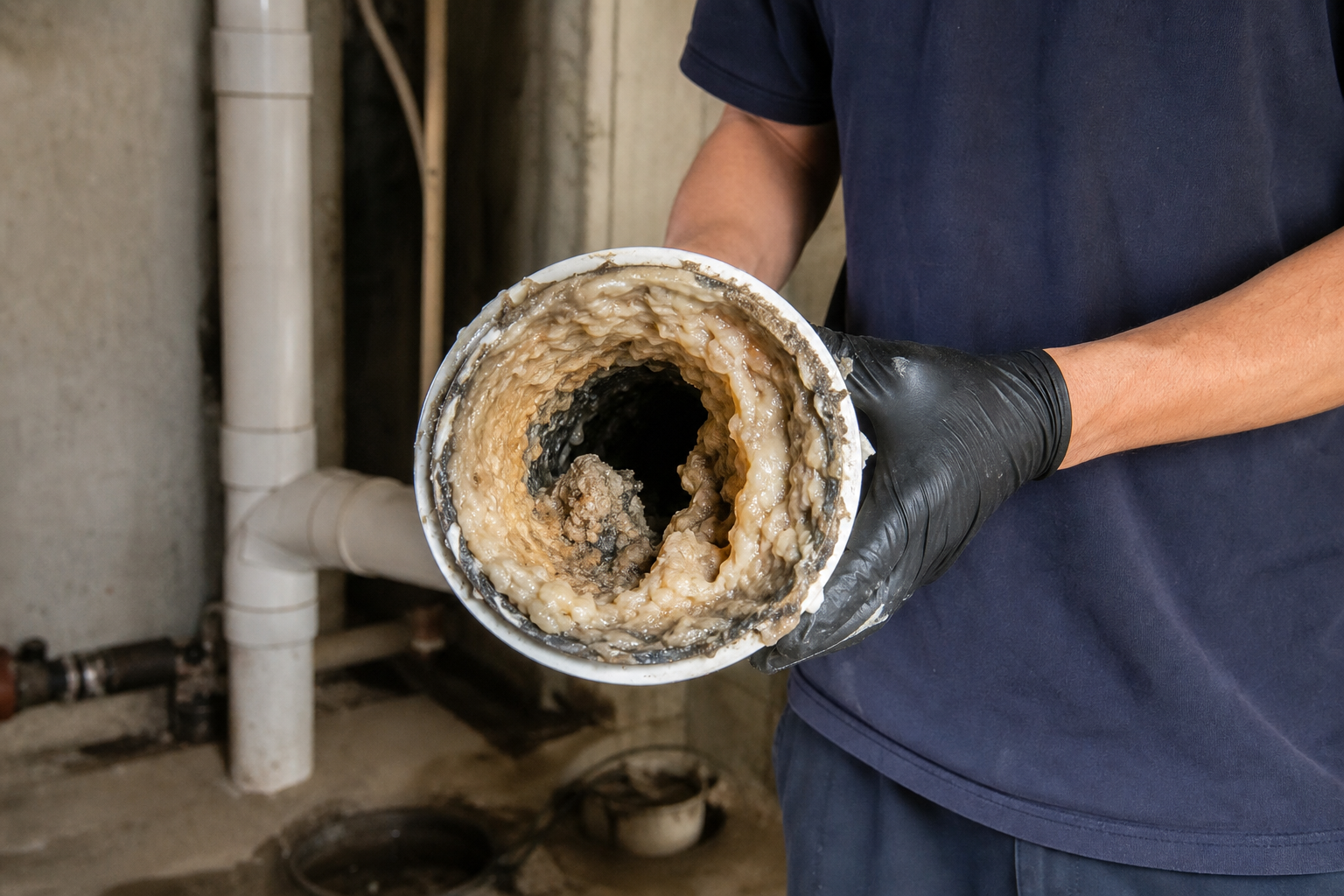
Cooking fats, oils, and grease enter household plumbing systems as liquids during daily meal preparation and dishwashing routines. As these liquid lipids pass down the drain pipe, they transfer heat directly to the surrounding pipe walls. In eastern Colorado, deep clay soils remain cold year-round, causing kitchen lateral lines buried beneath foundations or yards to cool rapidly. This temperature drop causes fats to congeal on the inner circumference of the pipe walls, layer by layer, until the internal diameter is drastically restricted.
Over time, this accumulation acts like a magnet for unground food particles, coffee grounds, and paper debris. What begins as a minor film of lipid buildup eventually transforms into a dense, solid mass that completely chokes off wastewater flow. Understanding how localized environment factors accelerate grease congealing allows homeowners to take effective action before emergency backups occur.
What Causes Kitchen Grease to Harden Underground in Aurora?
Kitchen grease hardens inside underground pipes because cold surrounding clay soil lowers the surface temperature of the plumbing pipe below the melting point of animal fats and vegetable oils. Animal fats like bacon grease, butter, and lard solidify at ambient temperatures between seventy and ninety degrees Fahrenheit. When warm sink water carries liquid fats down into a line buried beneath the frost line in Aurora, heat dissipates quickly into the surrounding earth, forcing the fats to transition back into a dense solid state.
Chemical interactions within the pipe worsen this physical transition. Tap water in the Denver metro area contains elevated levels of dissolved minerals like calcium and magnesium. When these hard water minerals bind with fatty acids in the wastewater stream, a chemical reaction known as saponification occurs. Saponification creates a hard, chalky substance similar to soap scum that clings tenaciously to cast iron, copper, ABS, and PVC pipe surfaces. Unlike pure grease, saponified deposits do not melt even when exposed to scalding water.
Why does poured grease harden inside sewer pipes even after running hot water?
Running hot water only pushes liquid grease further down the drainage system where the water cools down, allowing the fat to solidify against cold underground pipe walls. Once grease reaches an unheated lateral line beneath a basement slab or lawn, the thermal transfer causes rapid congealing regardless of how much hot tap water was used at the kitchen sink basin.
Why Chemical Liquid Cleaners Fail on Hardened Grease Clogs
Chemical drain cleaners fail on grease clogs because caustic liquids burn a tiny channel through the top of the soft blockage without scrubbing away the hardened lipid coating along the pipe walls. Store-bought chemical pour-over treatments rely on sodium hydroxide or sulfuric acid to generate intense heat and dissolve organic matter. When poured into a standing water backup, the chemical dilutes significantly before reaching the main point of restriction, rendering the active ingredients largely ineffective.
Even when caustic chemicals manage to bore a narrow passageway through a grease mass, they leave the perimeter wall coating completely intact. Within days or weeks, new kitchen debris attaches to the remaining tacky surface, causing the drain line to clog again. Furthermore, the extreme heat produced by chemical reactions can warp thin-walled plastic pipes, melt glue joints, or accelerate corrosion in older metal plumbing.
Can vinegar and baking soda dissolve solidified fats inside a drain line?
Baking soda and vinegar create an effervescent reaction that can loosen loose surface debris, but they cannot break down or dissolve heavy layers of congealed animal fats and cooking oils. Solidified grease requires mechanical scraping or high-pressure water scouring to strip the accumulated lipophilic coating off the interior walls of the pipe.
Primary Symptoms That Indicate a Kitchen Drain Requires Professional Clearing
Persistent kitchen drain clogs manifest through slow drainage, recurring gurgling noises in the P-trap, foul odors from rotting organic matter, and wastewater backing up into nearby fixtures. Recognising these early warning signs allows homeowners to schedule preventive kitchen drain cleaning before a complete stoppage stops household activities.
When grease restricts the interior pipe volume, air becomes trapped behind flowing water. As water attempts to pass through the narrowed opening, air bubbles force their way back up through the sink trap, producing distinct glug-glug noises. Concurrently, trapped food particles suspended inside the grease coating rot rapidly in the warm internal environment, releasing sewer gas odors through the sink basin.
| Symptom | Underlying Pipe Condition | Recommended Service Action |
|---|---|---|
| Slow draining kitchen sink basin | Early grease accumulation coating the lower half of the lateral line | Mechanical cabling with expanding grease blades |
| Gurgling sound in dishwasher or P-trap | Partial air displacement caused by severe grease restriction | Sewer camera inspection and hydro jetting |
| Water backing up into second sink basin | Complete line blockage near the fixture junction point | Professional snare removal and branch line scouring |
| Foul rotten odor from drain opening | Bacterial digestion of decaying organic fat deposits | High-pressure hydro jetting drain cleaning aurora co |
Effective Professional Solutions Provided by a Clogged Drain Service Near Me
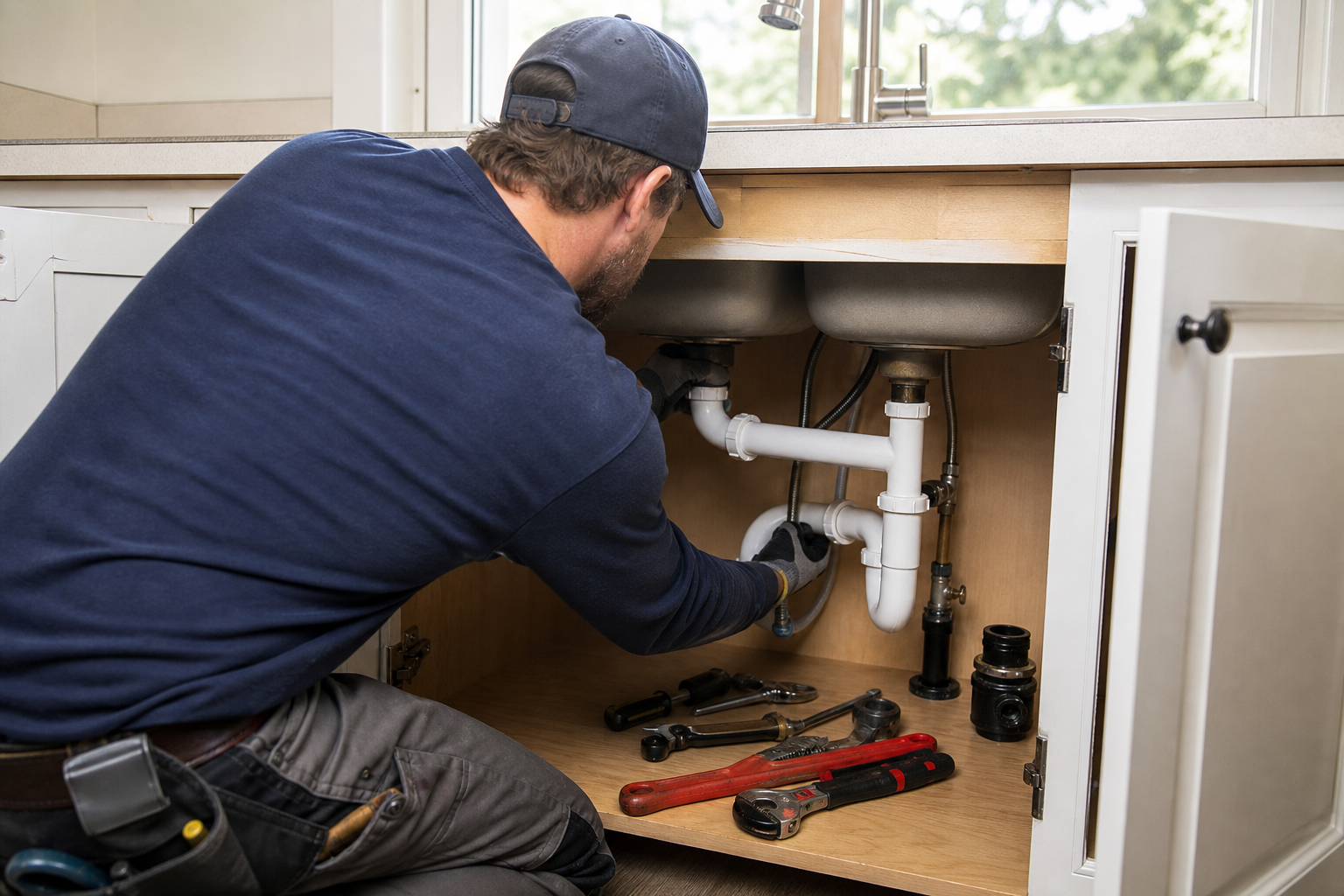
Professional plumbers clear stubborn kitchen grease blockages using mechanical drain snakes equipped with specialized cutting blades or high-pressure hydro jetting systems that scour pipe walls clean. When homeowners contact a professional service, technicians perform diagnostic steps to evaluate pipe integrity before selecting the appropriate clearance technique.
To evaluate which clearing method fits your plumbing infrastructure, review our hydro jetting versus cabling drain cleaning guide for detailed equipment comparisons. Using the proper technique ensures that grease is completely flushed away without damaging vulnerable pipe material or surrounding connections.
The Difference Between Scraper Cabling and Water Hydro Jetting
Mechanical cabling punches an immediate opening through a dense blockage, whereas hydro jetting uses pressurized water to wash away all grease buildup along the entire pipe surface. Mechanical drain cables feature rotating flexible steel cables fitted with specialized expandable grease heads. As the cable spins inside the pipe, the blades scrape against the interior walls to slice through hardened sludge.
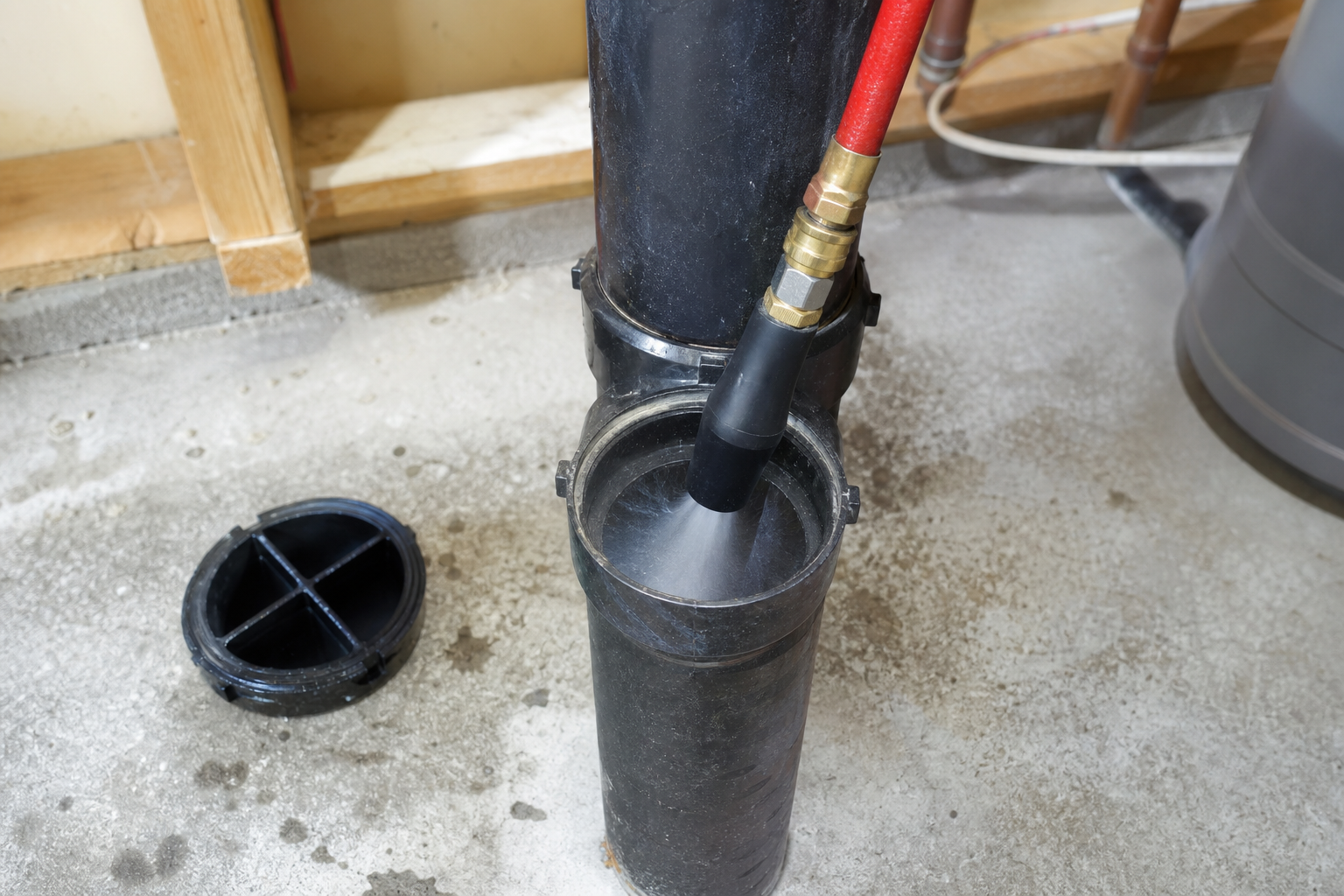
Hydro jetting takes drain cleaning step further by utilizing high-pressure water streams operating between 1,500 and 4,000 pounds per square inch. Multi-directional nozzle jets blast water backward and forward, emulsifying sticky grease films into tiny suspended particles that wash safely down to the municipal main line. Hydro jetting leaves the interior of the pipe restored to near original capacity.
How does a professional plumber remove congealed grease from a kitchen line?
A professional plumber uses high-pressure water hydro jetting or heavy-duty mechanical cabling to cut through grease deposits and wash the residual sludge entirely out of the plumbing system. Hydro jetting uses reverse-thrust nozzles that blast water at thousands of pounds per square inch to restore the pipe interior to its original diameter.
Preventative Kitchen Habits to Keep Household Drain Lines Free-Flowing
Homeowners can prevent grease clogs by scraping food residue into garbage bins, wiping oily pans with paper towels, and avoiding disposal of dairy or liquid fats down the sink. Modifying daily kitchen hygiene habits eliminates the vast majority of organic lipid accumulation before it ever enters household plumbing.
- Wipe oily cookware and skillet surfaces with dry paper towels prior to washing them in the sink basin.
- Pour excess liquid cooking oil and meat fats into disposable metal cans or glass containers to solidify for trash disposal.
- Run cold tap water when operating garbage disposals to solidify minor trace fats into chop-able bits that pass through the line.
- Install fine mesh strainers over sink drain openings to trap food scraps, pasta debris, and coffee grounds.
- Schedule annual maintenance with Aurora Drainage Service by calling 720-779-4946 for routine pipe clearing.
When to Contact a Clogged Drain Service Near Me in Aurora
Homeowners should contact a professional drain specialist immediately when sink drainage stops completely, water backs up into adjacent fixtures, or DIY plunge attempts fail. Underground line blockages in neighborhoods across Delmar Parkway, Green Valley Ranch, Murphy Creek, Sterling Hills, and Aurora Highlands frequently involve long horizontal pipe runs that require professional machinery to reach.
Delaying professional service allows grease blockages to build hydraulic pressure inside household plumbing. Prolonged water pressure can force wastewater past rubber coupling seals, leak beneath sink cabinets, or cause structural pipe failure. Homeowners facing persistent sink backups can rely on Aurora Drainage Service for immediate diagnostic evaluation and pipe restoration.
Questions Aurora homeowners ask us
- Is grease the only reason a kitchen sink keeps clogging in Aurora?
- While congealed grease is the primary cause of kitchen sink blockages, persistent clogs are also caused by fibrous food debris, un-ground coffee scraps, soap scum, or structural pipe defects like bellies and offset pipe joints underground.
- Can cold water cause grease to harden immediately inside the sink trap?
- Cold water solidifies liquid grease quickly, which can stop it inside the curved P-trap right under the sink where it is easier to clean out manually rather than letting it wash into underground lines.
- How often should a kitchen drain line undergo routine professional cleaning?
- Most single-family homes in Aurora benefit from professional kitchen drain cleaning every eighteen to twenty-four months to remove gradual fat accumulation before complete line blockages occur.
- Will boiling water clear a stubborn grease blockage far down the line?
- Boiling water can melt minor grease film near the sink basin, but the water loses heat rapidly as it travels through cold underground lines, causing the melted grease to solidify further down the system.
Where Aurora Drainage Service works from
We dispatch across Aurora and the wider Denver metro, 24 hours a day. Call 720-779-4946 and a tech is usually rolling the same day.
Drainage service
Phone: (720) 779-4946
Hours: Open 24 hours
On-Call Rooter LLC drainage service on Google Maps — Aurora, CO