Quick answers
- Mechanical cabling physically punctures and cuts tough clogs like tree roots and solid objects.
- High-pressure hydro jetting scours 100 percent of internal pipe walls to remove grease, scale, and sludge.
- Fiber-optic sewer cameras should always inspect pipes beforehand to identify structural weaknesses.
- Snaking provides short-term clog relief, while hydro jetting offers long-term line restoration.
- Aurora Drainage Service offers 24/7 diagnostic and clearing solutions across the Denver metro area.
Hydro jetting and mechanical cabling are two distinct professional methods used to restore flow in blocked plumbing lines, with hydro jetting offering 360-degree washing and cabling offering targeted physical cutting. For property owners seeking reliable drain cleaning denver solutions, selecting the proper technique depends on the specific failure mode inside the pipe, whether it is heavy grease, intrusive roots, or solid debris. Aurora Drainage Service provides comprehensive sewer diagnostics and clearing across the Denver metro area, helping property owners protect their underground plumbing infrastructure. Call 720-779-4946 for immediate, round-the-clock service.
When wastewater backs up into sinks, showers, or basements, identifying the root cause is the first step toward long-term restoration. Mechanical snakes and high-pressure water jetters serve different functions in drain maintenance. Snaking punctures a hole through an obstruction to restore immediate flow, whereas jetting scrubs the inner pipe walls clean to prevent future backups. Misapplying these tools can lead to incomplete clearing or structural damage to older plumbing lines found throughout Colorado neighborhoods.
In regions like Aurora, Denver, Centennial, and Green Valley Ranch, soil conditions and aging pipe materials present unique plumbing challenges. Expansive clay soils shift underground laterals, creating offset joints where roots enter and grease collects. Aurora Drainage Service uses fiber-optic camera technology to inspect lines prior to clearing, ensuring the safest and most effective clearing technique is deployed every time. Our technicians answer service calls 24 hours a day, 7 days a week, bringing specialized equipment to residential and commercial properties throughout the metro area.
Understanding the Mechanical Differences in Drain Cleaning Denver Options
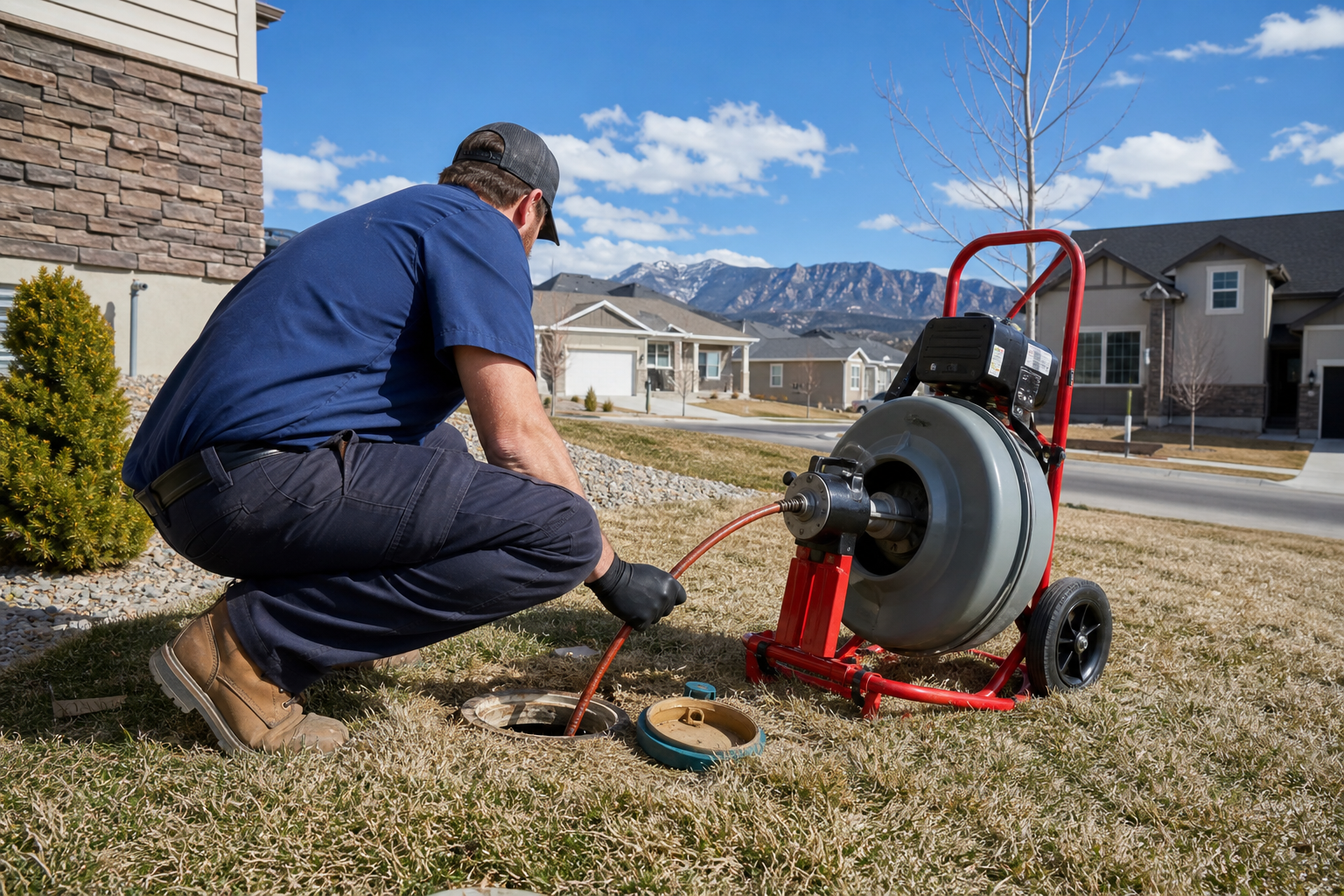
Mechanical cabling clears blockages by physically punching through obstructions with a rotating steel cable, whereas hydro jetting uses pressurized water to thoroughly scour grease, roots, and scale from the full circumference of pipe walls. A mechanical snake consists of a flexible metal cable driven by an electric motor that rotates a specialized blade or auger head through the pipe. As the cable feeds through the lateral, the cutter slices through paper, hair, and soft tree roots, opening a channel for standing water to drain away. Cabling has been the standard emergency clearing technique for decades because it quickly restores basic drainage during a total sewer backup.
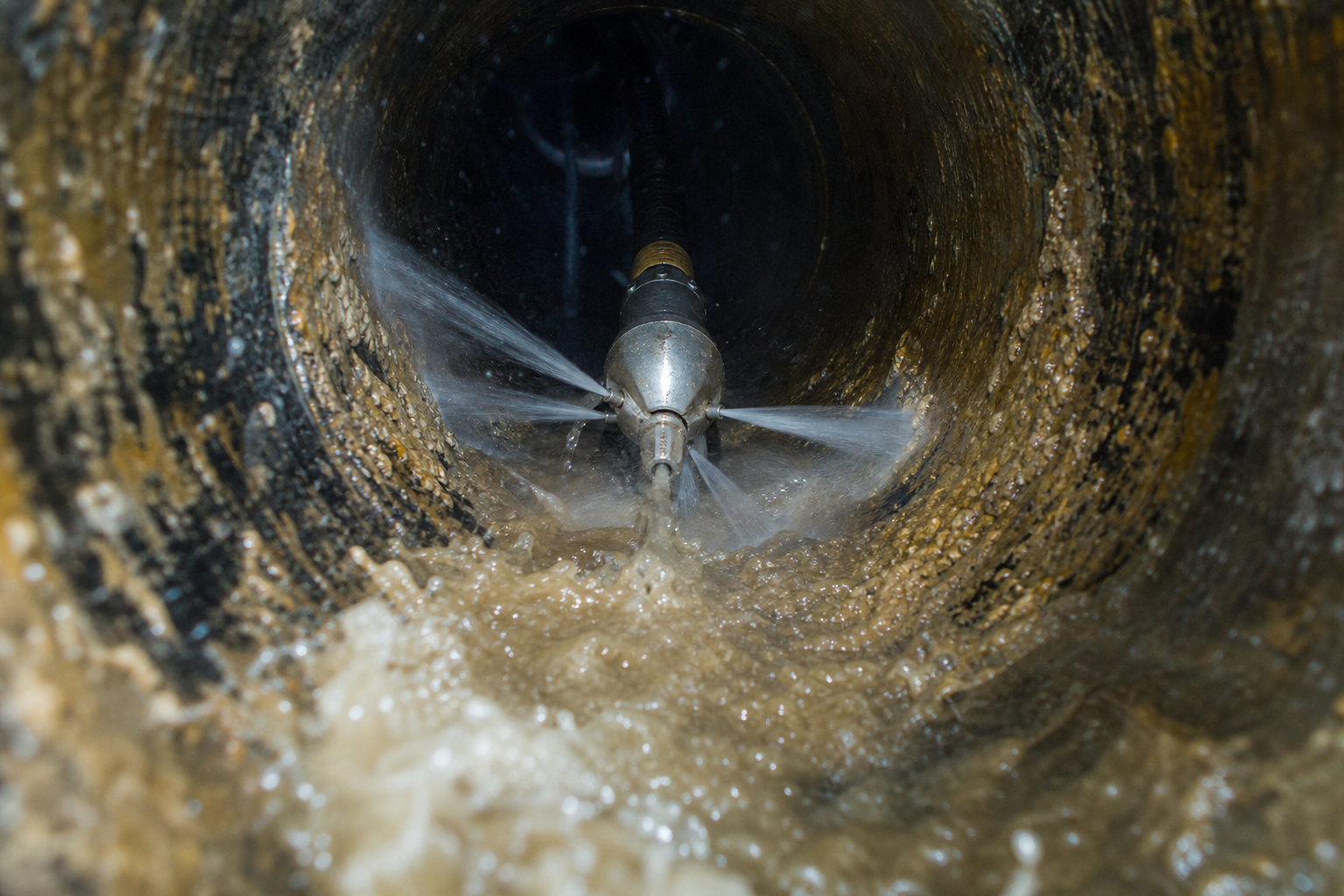
Hydro jetting operates on an entirely different principle, using a high-pressure water pump that pushes water through a flexible hose at 3,000 to 4,000 pounds per square inch. A specialized nozzle attached to the end features backward-facing water jets that propel the hose forward while washing away grease, mineral scale, sand, and fine root masses. While snaking leaves heavy grease and biological film clinging to the pipe walls, hydro jetting restores the interior diameter of the pipe back to near-original capacity. Property owners looking for thorough drain cleaning denver rely on this high-pressure technology when simple snaking fails to deliver long-lasting relief.
The operational distinction between the two methods lies in force application and surface coverage. Cabling applies rotational mechanical force along a flexible steel shaft, concentrating power at the tip where the cutting blade meets the obstruction. This allows the operator to break through dense physical mass, but it leaves untouched areas along the upper and side walls of the pipe. Hydro jetting applies multi-directional hydraulic force that coats the entirety of the pipe wall in high-velocity water, dislodging stickier materials that mechanical blades pass right through.
Failure Modes Best Solved by Mechanical Cabling
Mechanical cabling is best suited for localized, rigid blockages such as dense tree root masses, solid object obstructions, and sudden emergency clogs in isolated branch lines. When a toilet or sewer lateral becomes blocked by non-flushable wipes, feminine hygiene products, or heavy root intrusion, a rotating steel blade provides the mechanical torque necessary to tear apart the obstruction. Cabling is also the primary choice when working on delicate interior branch lines under sinks or tubs where high water pressure could back up through auxiliary fixtures.
In older Denver and Aurora neighborhoods with mature cottonwood and elm trees, root systems enter clay-tile pipe joints seeking moisture. A heavy-duty continuous cable fitted with C-cutter blades cuts through thick taproots that high-pressure water cannot easily slice. Homeowners dealing with persistent root growth can review our comprehensive guide on tree root intrusion to understand how roots invade underground pipes and why mechanical cutting is often the initial physical removal step. Furthermore, if a pipe exhibits structural cracks or partial collapse, cabling allows an operator to feel physical resistance through the cable, reducing the risk of blowing water out of a collapsed section.
Another key scenario for cabling is single-fixture backups caused by foreign objects. Children's toys, small rags, and hard plastics dropped down toilets cannot be dissolved or easily blasted away by water pressure without creating further downstream jams. A mechanical cable equipped with a retrieving head or bulb auger can hook onto the object and pull it back out through the cleanout, resolving the obstruction without pushing the item deeper into the main sewer network.
Failure Modes Best Solved by High-Pressure Hydro Jetting
High-pressure hydro jetting is the ideal solution for heavy grease accumulations, thick sludge, soft scale buildup, sand deposits, and comprehensive long-term cleaning of complete main sewer lines. Kitchen lines in commercial settings or residential homes frequently develop thick layers of congealed fats, oils, and grease along the bottom and sides of the pipe. A mechanical snake will merely drill a small hole through grease, which quickly closes back up once the cable is pulled out. Hydro jetting liquefies and flushes grease completely out to the municipal sewer main.
Additionally, hydro jetting clears bellies or low spots in sewer lines where sand, gravel, and heavy biological sludge accumulate over time. The high-volume water flow flushes settled debris out of the line entirely rather than stirring it up in place. Hydro jetting is also superior for long-term maintenance against fine hair roots that act like a strainer, trapping paper and kitchen waste. Aurora Drainage Service technicians evaluate every line to ensure hydro jetting is used under optimal pressure settings, eliminating scale without compromising structural safety.
Hydro jetting is also the preferred maintenance tool prior to trenchless pipe lining or pipe coating procedures. When epoxy sewer liners are installed, the existing pipe interior must be entirely clean of debris, scale, and organic film so the liner can adhere directly to the pipe walls. Mechanical snaking cannot prepare a pipe surface to the level required for relining, whereas hydro jetting strips away every micro-layer of contamination, providing a clean substrate for trenchless restoration.
Can cabling damage fragile sewer pipes during clearing?
Mechanical cabling can damage fragile or severely deteriorated sewer pipes if the rigid steel head impacts brittle clay tiles, broken cast iron, or corroded thin-walled lines during rotation. High rotational torque can crack weakened pipe walls or snag on offset joints, compounding structural defects. Fiber-optic inspections help prevent cabling damage by assessing pipe condition beforehand.
Is hydro jetting safe for older vitrified clay pipe lines?
Hydro jetting is generally safe for vitrified clay pipe lines if the pressure is regulated properly and the pipe structure is intact without existing collapses or offset joints. Specialized low-pressure or spinning nozzles can clean clay pipes without dislodging loose mortar or cracking tiles, making pre-cleaning camera diagnostics essential for safety.
Head-to-Head Comparison: Jetting versus Snaking for Drain Cleaning Denver Properties
Comparing cabling and hydro jetting reveals that cabling excels at quickly breaching single-point physical clogs, while hydro jetting provides complete 360-degree wall restoration for persistent grease and debris. Understanding how each method performs across various operational criteria helps home and business owners make informed maintenance decisions. Aurora Drainage Service offers both technologies to address specific sewer lateral conditions throughout the Denver metro area.
| Criteria | Mechanical Cabling (Snaking) | High-Pressure Hydro Jetting |
|---|---|---|
| Primary Mechanism | Rotating steel blades cut physical obstructions | 3,000-4,000 PSI water scours entire pipe interior |
| Best For | Dense root masses, solid objects, localized clogs | Grease accumulation, heavy sludge, scale, sand |
| Cleaning Thoroughness | Opens a pathway (2-4 inch hole in main line) | Cleans 100% of internal pipe wall surface area |
| Risk to Weak Pipes | Moderate risk from blade impact on thin/cracked walls | Low to high depending on applied PSI and pipe stability |
| Prevention Longevity | Temporary relief; roots and grease return faster | Long-term relief; leaves clean pipe walls |
| Typical Equipment | Motorized drain machine with flexible steel cable | Trailer/skid-mounted high-pressure water jetter |
When should a homeowner choose jetting over traditional snaking?
A homeowner should choose hydro jetting over traditional snaking when dealing with recurring grease accumulation, heavy scale, sand buildup, or when seeking a complete line clean rather than a temporary pathway through a clog. Jetting is ideal before pipe lining or when cabling fails to keep a line clear for more than a few months.
Evaluating Pipe Materials and Structural Risks Before Service
Older pipe materials like offset vitrified clay, orangeburg, or heavily corroded cast iron require careful structural evaluation with a camera prior to choosing between mechanical cabling torque and hydro jetting pressure. Homes built in Denver and surrounding suburbs prior to 1980 frequently feature clay-tile or cast iron sewer laterals. Clay pipes are prone to joint offset and cracking due to soil movement, while cast iron develops rough internal scaling called tuberculation.
Selecting between snaking and jetting requires matching the cleaning force to the pipe material. Cabling rough cast iron can break off rust flakes that bind the cable, whereas hydro jetting removes scale smoothly without mechanical catching. Conversely, running a high-pressure jetter in a tar-paper Orangeburg pipe or a partially collapsed clay line can erode the weakened pipe walls or expand existing breaks. Property owners in Delmar Parkway, Watkins, Sterling Hills, or Murphy Creek can access experienced technicians and specialized equipment through our local drain specialists in Aurora to diagnose pipe integrity before work begins. Aurora Drainage Service ensures every service call utilizes the precise pressure and equipment configuration necessary to protect your home's infrastructure. Call us at 720-779-4946 for advice tailored to your property's plumbing setup.
Diagnostic Process: Determining Which Method Your Sewer Line Requires
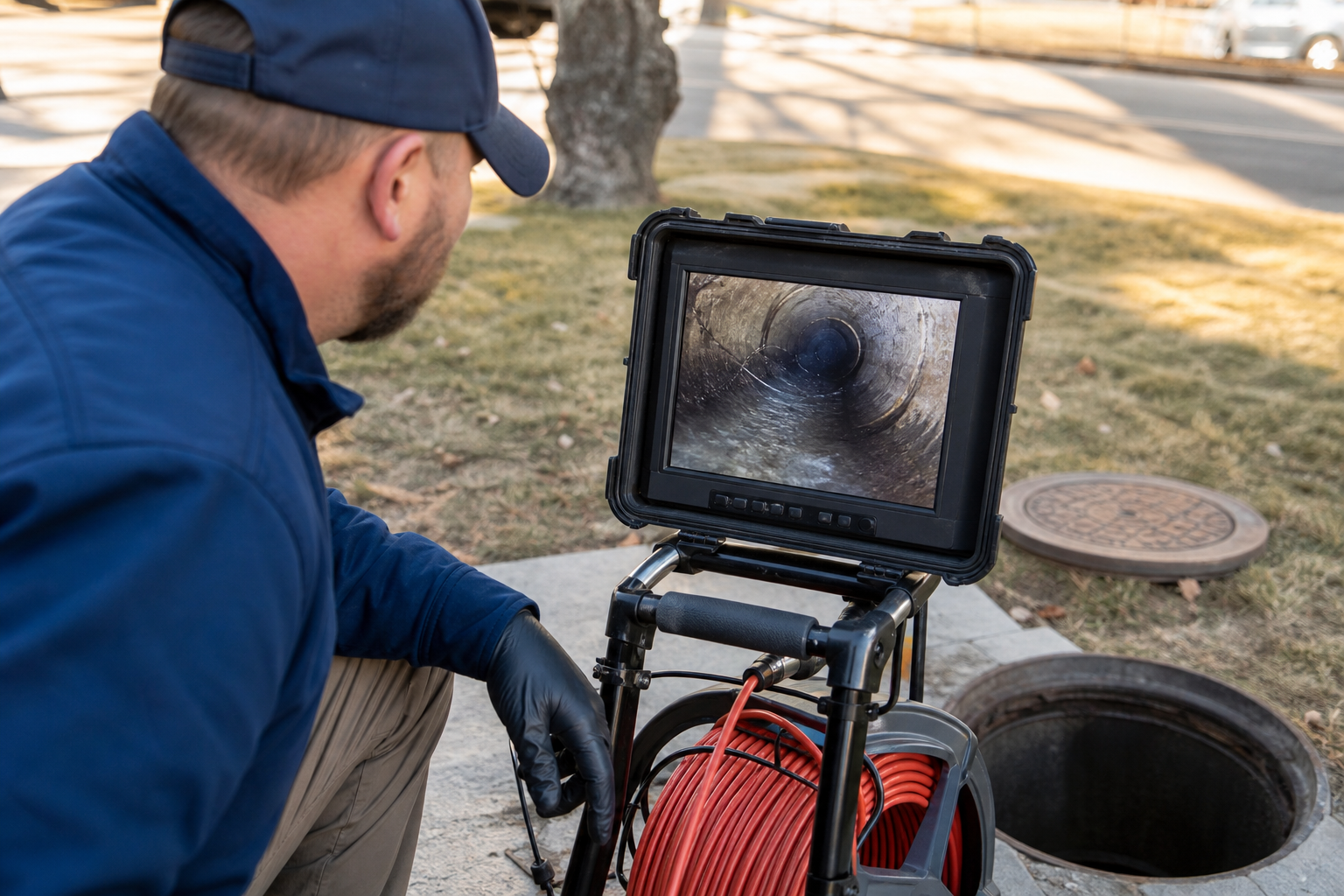
Determining whether a line needs snaking or jetting requires a multi-step inspection process using fiber-optic cameras to identify the pipe material, structural integrity, and exact composition of the blockage. Skipping diagnostics often leads to repeated backups, unexpected pipe damage, or wasted expenditure on the wrong clearing method. Aurora Drainage Service follows a standard diagnostic protocol across all service calls in the Denver metro area.
- Perform initial flow testing and baseline evaluation to identify affected fixtures and severity of the backup.
- Access the main sewer line through an exterior cleanout or pulled toilet to insert a HD fiber-optic camera head.
- Push the camera through the lateral to locate the blockage, inspect joint integrity, and identify pipe composition.
- Assess structural risks, such as cracks, sags, crushed sections, or offset clay pipe joints.
- Select mechanical cabling if dense root masses or solid objects are found, or hydro jetting if grease, sludge, or heavy scale dominate the pipe interior.
- Conduct a post-clearing camera verification to confirm full flow restoration and inspect the underlying pipe condition.
Questions Aurora homeowners ask us
- How often should a main sewer line undergo hydro jetting in Colorado?
- Residential main sewer lines in Colorado typically benefit from hydro jetting every 2 to 3 years as preventative maintenance, particularly in older neighborhoods with established trees or homes with prone clay-tile laterals.
- Will mechanical snaking remove heavy grease buildup from kitchen pipes?
- Mechanical snaking will not remove heavy grease buildup effectively because the rotating blade cuts a narrow hole through the grease without clearing the pipe wall, allowing grease to quickly close back up.
- What is the risk of hydro jetting if a sewer pipe is cracked?
- High-pressure water from hydro jetting can enter structural cracks, washing away surrounding soil or escalating minor fractures into complete pipe collapses if pressure is not properly regulated during service.
- Does insurance cover drain cleaning or hydro jetting for line restoration?
- Homeowner insurance standard policies typically exclude routine drain cleaning or hydro jetting unless you have a specific water backup endorsement, which may reimburse cleaning costs resulting from a sudden main backup.
- How long does a hydro jetting procedure take on a standard lateral?
- A standard residential hydro jetting procedure takes between 1 and 2 hours, including pre-cleaning fiber-optic video inspection, pressure setup, high-pressure washing runs, and post-jetting video verification.
Where Aurora Drainage Service works from
We dispatch across Aurora and the wider Denver metro, 24 hours a day. Call 720-779-4946 and a tech is usually rolling the same day.
Drainage service
Phone: (720) 779-4946
Hours: Open 24 hours
On-Call Rooter LLC drainage service on Google Maps — Aurora, CO