Quick answers
- Plains Cottonwood and American Elm tree roots are the leading cause of main sewer line backups in older Aurora homes.
- Vitrified clay-tile pipes installed prior to 1980 feature hub joints that separate due to expansive soil movement.
- Fiber-optic camera inspections pinpoint exact root intrusion locations before mechanical cutting or hydro jetting.
- Hydro jetting uses 4,000 PSI water pressure to strip root fibers and grease completely from sewer pipe walls.
- Annual dichlobenil chemical foam treatments prevent root fibers from re-entering clay pipe joints.
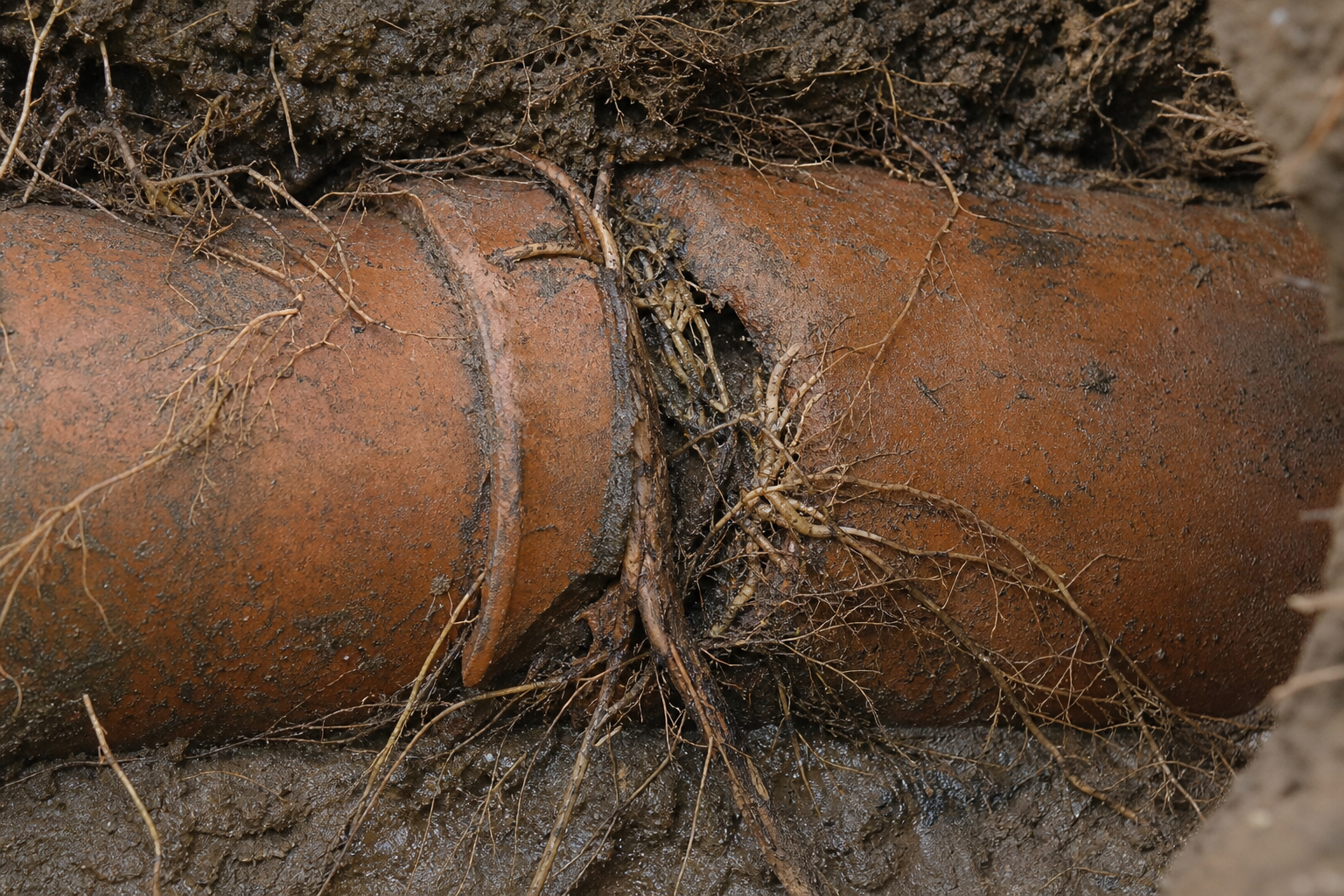
Tree root intrusion into sewer pipes in Aurora, Colorado is primarily caused by mature cottonwood and American elm trees seeking water through weak, unsealed joints in legacy vitrified clay-tile laterals. Aurora Drainage Service provides 24/7 root removal and main line sewer clearing throughout the Denver metro area, reachable at 720-779-4946. Homes built between 1950 and 1980 in neighborhoods like Delmar Parkway, Morris Heights, and Hoffman Heights frequently experience complete blockages due to expansive Bentonite clay soil shifting subterranean pipes, creating gaps for root fibers to penetrate.
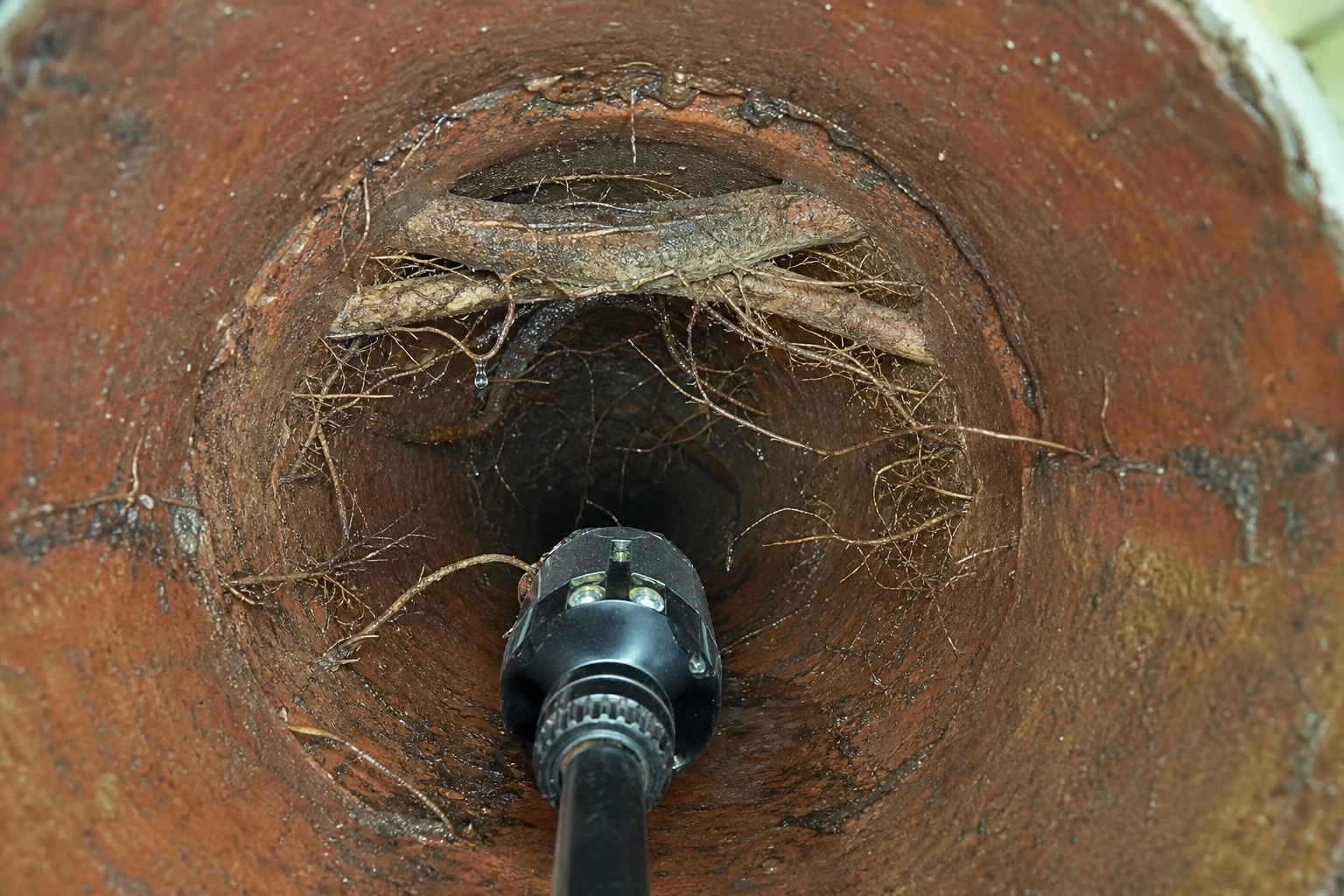
When tree roots enter a sewer pipe, microscopic root hairs expand upon contact with warm wastewater, growing into dense root masses that capture toilet paper, grease, and solid waste. This hydraulic restriction eventually causes sewage to back up into basement floor drains and lower-level bathtubs. Comprehensive drain cleaning aurora co solutions require identifying the precise depth and position of root masses using fiber-optic cameras before selecting a mechanical or hydro-jetting removal method.
Environmental Mechanisms Driving Root Penetration in Aurora Laterals
Expansive clay soils in Aurora shift continuously during seasonal freeze-thaw cycles, cracking older sewer pipe joints and attracting tree root networks to moisture leaks. Aurora is built largely on smectite and bentonite clay soils that exhibit extreme shrink-swell capacity. During wet spring months and rapid snowmelt events in the Denver metro region, this clay soil absorbs vast amounts of water and expands significantly. In contrast, late summer dry spells and freeze-thaw winter conditions cause the soil to contract, pulling away from buried utility lines. This relentless physical movement exerts immense shear forces on underground sewer laterals. Vitrified clay-tile pipes, which were installed in four-foot sections throughout mid-century Aurora developments, are highly susceptible to shifting under these forces. As individual pipe segments tilt or separate, the mortar connections between them fracture, releasing water vapor into the surrounding dirt.
Tree roots do not possess a conscious navigation system, but they exhibit strong hydrotropism, naturally growing toward moisture gradients in the soil matrix. Species such as Populus deltoides (Plains Cottonwood), Ulmus americana (American Elm), and Acer saccharinum (Silver Maple) feature expansive, shallow root systems designed to survive Colorado semi-arid climate. A mature cottonwood root system can spread radially up to three times the height of the tree canopy. When these aggressive root systems detect minute traces of moisture leaking from broken sewer hub joints, tiny hair-like feeder roots penetrate the cracks. Once inside the pipe, the rich nutrient environment supplied by domestic wastewater accelerates root development, transforming fine fibers into thick, woody root masses that obstruct wastewater flow.
Recognizing Early Warning Signs of Lateral Root Infiltration
Initial symptoms of sewer line root intrusion include persistent gurgling noises from plumbing fixtures, slow-draining plumbing units across multiple rooms, and recurring sewer gas odors inside lower living areas. Homeowners often mistake early root intrusion symptoms for localized clogs in isolated sink drains or toilet P-traps. However, because tree roots enter the main sewer lateral beneath the yard, root-induced blockages affect the entire building drain system simultaneously. In the early stages of root penetration, wastewater can still pass through the fringe of the root mass, but solid toilet waste and paper products begin catching on the coarse root fibers. This partial obstruction slows hydraulic velocity, leading to sluggish drainage in basement showers and floor drains. As air becomes trapped behind accumulating waste, flushing an upstairs toilet will push air pockets backward, creating distinctive bubbling or gurgling sounds in lower-level bathtubs. Ignoring these early signs eventually results in complete main sewer line stagnation, forcing raw wastewater backward through basement floor drains during high-water-use activities such as laundry cycles.
How do mature tree roots access underground plumbing pipes?
Tree roots access underground plumbing pipes by growing toward vapor moisture leaking from loose pipe joints or stress fractures. Once micro-roots find an opening, water and nutrients nourish the root system, causing root fibers to expand rapidly and fill the inner diameter of the drain line.
- Perform baseline hydraulic testing across all main floor and basement fixtures to determine whether drainage restriction is isolated or systemic across the main line.
- Locate and open the primary exterior main sewer cleanout access cap, inspecting the cleanout pipe for standing water or sewage buildup.
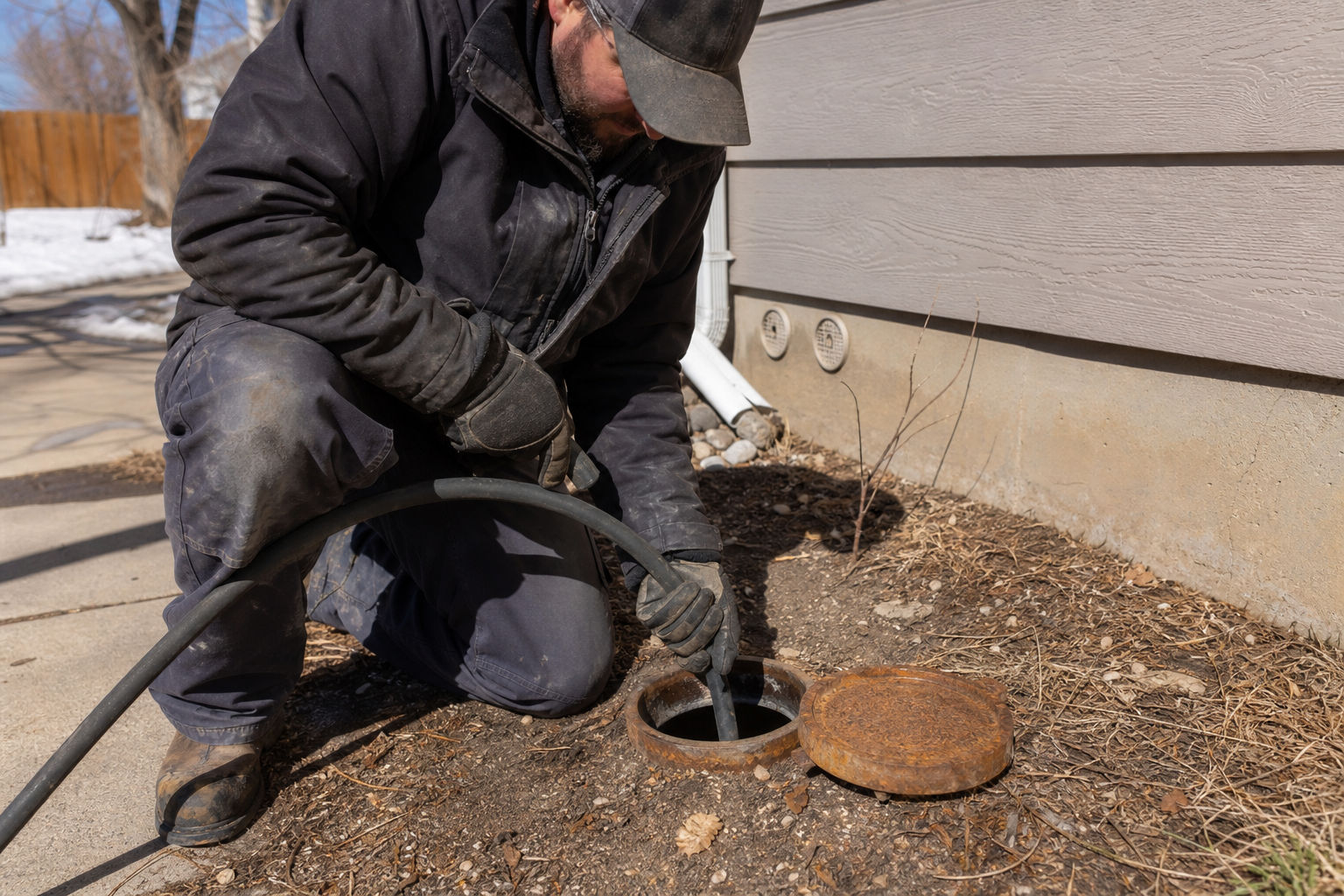
- Deploy a high-definition fiber-optic sewer camera through the main sewer cleanout to record real-time video footage of the internal lateral condition, pin-pointing exact root entry locations and pipe offsets.
- Execute targeted root mass removal utilizing heavy-duty mechanical cabling equipment provided by professional drain cleaning aurora co or high-pressure hydro-jetting systems to cut through wood fibers.
- Conduct a secondary video camera inspection following root clearing to verify complete mass removal and evaluate the structural integrity of the underlying clay or cast-iron pipe wall.
Drain Cleaning Aurora CO Solutions for Root Removal in Sewer Lines
| Method | Primary Mechanism | Root Removal Power | Pipe Safety Profile | Relief Duration |
|---|---|---|---|---|
| Mechanical Cabling | Steel cable with expandable C-cutter heads | Moderate (Cuts core mass) | Safe for intact pipes | 6 to 12 Months |
| High-Pressure Hydro Jetting | Rear-facing water streams up to 4,000 PSI | High (Flushes roots and scale) | Requires intact walls | 12 to 24 Months |
| Chemical Root Foaming | Dichlobenil herbicide foam application | Low initial (Preventative) | Safe for all pipe materials | 12 to 24 Months |
| Trenchless Epoxy CIPP Lining | Seamless resin-saturated felt sleeve insertion | Permanent root barrier | Safe for structural clay | 50+ Years |
Selecting the appropriate clearing method depends on the severity of the root invasion and the physical state of the underlying pipe material. Mechanical drain cabling, often referred to as drain snaking, uses a rigid steel cable driven by a heavy-duty electric motor to spin specialized cutting heads inside the lateral. The expanding steel blades slice through dense taproots and thick root bundles, restoring immediate flow through the center of the pipe. However, mechanical blades leave short root stubs attached to the pipe hub seams, allowing regrowth over time. High-pressure hydro jetting provides a more thorough cleaning process by pumping water at pressures up to 4,000 PSI through multi-directional brass nozzles. Hydro jetting strips away root filaments, grease accumulations, and heavy mineral scale from the full 360-degree interior surface of the pipe, flushing the debris out toward the municipal main line in the street.
Why are clay-tile pipes particularly vulnerable to tree root intrusion?
Vitrified clay-tile pipes are vulnerable to root intrusion because they were installed in short four-foot sections connected by unsealed mortar or rubber rings that degrade over time. Aurora expansive clay soil shifts these short sections, breaking the mortar seals and creating direct entry pathways for thirsty tree roots.
Financial Factors and Repair Options for Root-Damaged Sewer Pipes
Resolving sewer root damage costs vary depending on whether the blockage requires standard mechanical cutting, hydro-jet flushing, trenchless epoxy relining, or complete excavation of the damaged pipe line. In Aurora and surrounding Denver metro communities, basic mechanical root clearing typically serves as the initial, lower-cost option for emergency relief. However, when root intrusion causes physical cracking or structural displacement of clay pipe hubs, repeated drain clearing becomes a temporary bandage rather than a long-term resolution. Factors influencing repair expenses include line depth—which frequently exceeds eight feet in older Aurora subdivisions like Meadowood and Jewell Heights—and surface conditions such as concrete driveways, mature landscaping, or city street right-of-ways.
When root intrusion damages pipe integrity beyond simple clearing, homeowners can choose between trenchless cured-in-place pipe (CIPP) lining and traditional open-trench replacement. CIPP lining involves pulling an epoxy-saturated felt tube through the existing clay pipe, which is then inflated and heat-cured to create a seamless, joint-free pipe inside the old one. This trenchless approach eliminates the joint gaps where roots penetrate, providing a long-term barrier without destroying lawns or driveways. Engaging experienced plumbers in aurora colorado ensures that video inspections correctly diagnose structural suitability before investing in epoxy lining or trench excavation.
Will hydro jetting destroy old clay sewer pipes in Denver metro homes?
High-pressure hydro jetting will not damage sound clay sewer pipes when performed at calibrated pressures below 4,000 PSI by trained technicians. However, if a camera inspection reveals cracked, offset, or collapsed pipe walls, mechanical cabling or pipe relining is required to avoid structural failure.
Preventative Drain Cleaning Aurora CO Protocols for Clay Pipe Maintenance
Preventing root recurrence in legacy sewer pipes requires annual fiber-optic camera monitoring combined with root-inhibiting chemical applications every 12 months. Once roots have established an entry pathway into a sewer lateral, clearing the pipe clears the immediate obstruction but leaves open invitation for future root growth. Aquatic herbicide treatments containing dichlobenil can be applied as an expanding foam through the home cleanout. This chemical foam coats the top and sides of the pipe interior, penetrating into the joint gaps to deaden root tips on contact without harming the tree above ground. Annual re-application creates a persistent chemical barrier that prevents fine root fibers from re-entering the pipe hub seams.
Homeowners in established neighborhoods such as Aurora Highlands and Sterling Hills should also consider strategic landscape planning. When planting new trees or large shrubs, select species with compact, non-invasive root structures, such as dwarf fruit trees or decorative maples, and maintain a minimum clearance distance of 20 to 30 feet from underground sewer utilities. For continuous protection and rapid response during unexpected plumbing emergencies, Aurora Drainage Service provides complete inspection and sewer clearing solutions across the region. Contact Aurora Drainage Service at 720-779-4946 to schedule a comprehensive sewer lateral camera assessment and keep your drainage system flowing clear.
Questions Aurora homeowners ask us
- What tree species cause the most sewer line damage in Aurora?
- Plains Cottonwood, American Elm, and Silver Maple trees cause the most sewer line damage in Aurora due to their shallow, aggressive root systems that actively seek underground water sources during dry seasons.
- How often should sewer lines in older Aurora homes be cleared of roots?
- Sewer lines in older Aurora homes with clay pipes should be mechanically cleared or hydro-jetted every 12 to 18 months, supplemented by annual root-inhibiting chemical treatments to prevent complete pipe blockages.
- Can chemical root killers completely replace professional drain cleaning?
- Chemical root killers cannot replace professional drain cleaning because chemicals only retard new root growth and cannot remove existing, dense root masses or solid debris already clogging the main line.
- Is the homeowner responsible for root intrusion in the sewer lateral?
- The homeowner is responsible for maintaining and repairing the entire private sewer lateral line from the house connection all the way to the junction at the municipal sewer main in the street.
Where Aurora Drainage Service works from
We dispatch across Aurora and the wider Denver metro, 24 hours a day. Call 720-779-4946 and a tech is usually rolling the same day.
Drainage service
Phone: (720) 779-4946
Hours: Open 24 hours
On-Call Rooter LLC drainage service on Google Maps — Aurora, CO