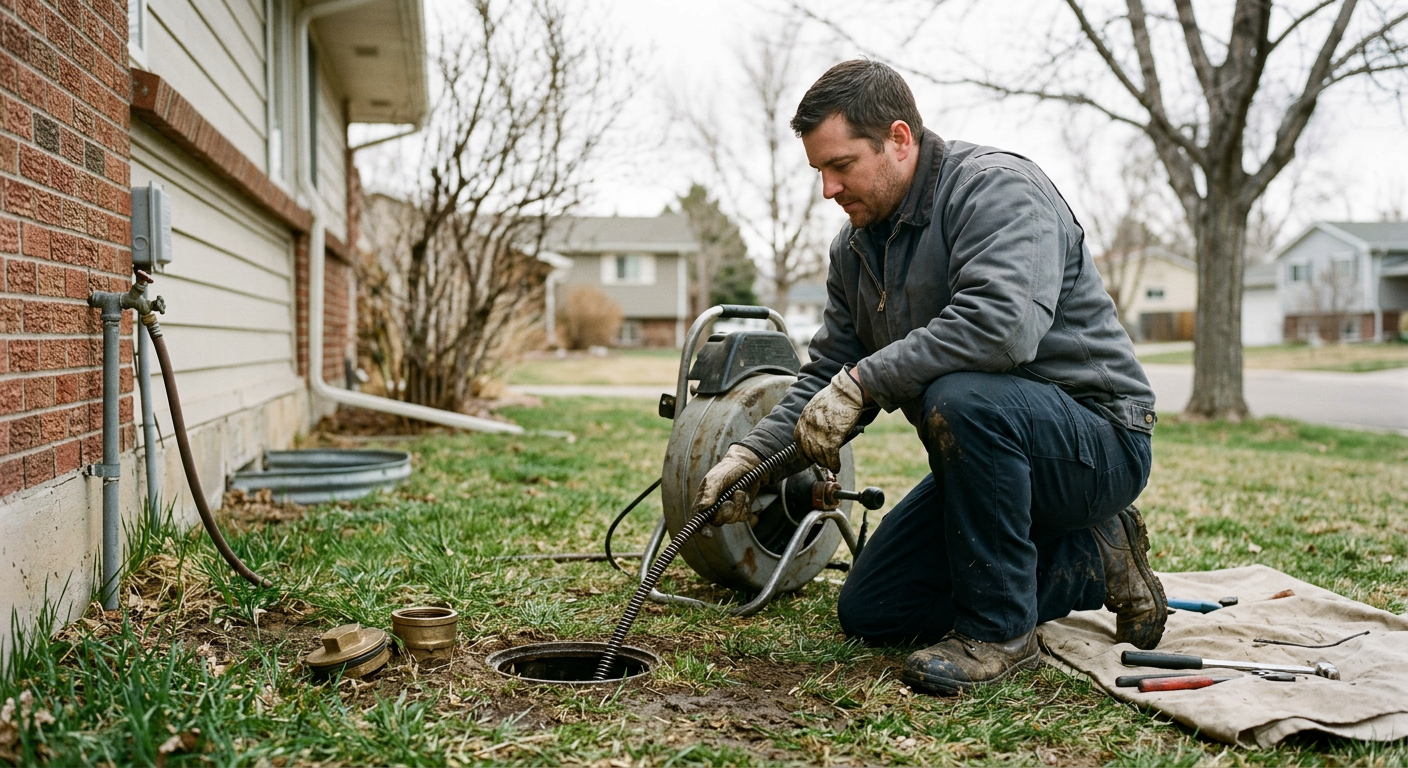
Most Aurora residential sewer laterals require professional cleaning every 18 to 24 months for modern PVC systems, or every 12 to 18 months for older vitrified clay or cast iron pipes. Properties with mature yard trees or heavy commercial grease discharge may need specialized rooter service or commercial drain cleaning every 3 to 6 months.
Key takeaways
- Modern residential PVC lines generally need preventative cleaning every 18 to 24 months.
- Older clay and cast iron sewer pipes across Aurora benefit from annual rooter service every 12 months.
- Mature shade trees and expansive Front Range bentonite clay accelerate line blockages and demand tighter cleaning intervals.
- Commercial kitchens, restaurants, and busy office facilities require tailored drain maintenance every 3 to 6 months.
- Proactive mechanical snaking and root cutting prevent catastrophic wastewater backups into lower-level living spaces.
Establishing a consistent main line cleaning frequency is one of the most effective ways for Aurora homeowners and commercial property managers to avoid catastrophic wastewater backups. Your main sewer lateral carries all wastewater from kitchen sinks, toilets, showers, and laundry appliances out to the city sewer main beneath the street. Over months and years, grease residues, flushed paper products, mineral scale, and aggressive tree roots accumulate along the interior walls of this underground pipe. Without routine maintenance, these materials slowly narrow the pipe's interior diameter until a sudden stoppage forces raw sewage backward through the lowest plumbing fixtures in your building.
What baseline main line cleaning frequency keeps Aurora sewer laterals flowing?
A standard residential main line cleaning frequency in Aurora ranges between 18 and 24 months for modern plumbing systems, while older properties typically require service every 12 months. This timeframe prevents organic waste, soap scum, and minor sediment from congealing into dense blockages. Technicians working across the Denver Metro area evaluate several specific physical variables—such as pipe diameter, lateral slope, household occupancy, and historical line performance—to establish an exact preventative maintenance cadence for each property.
If your home was constructed within the last twenty years using smooth, seamless PVC or ABS plastic piping, you can generally adhere to a two-year cleaning cycle unless you notice changes in drainage speed. Conversely, homes built with vitrified clay or unlined cast iron pipes require more frequent attention due to joint seams and rough internal pipe surfaces that catch debris. You can browse our Aurora drainage blog archive to read more field insights on local plumbing infrastructure and lateral maintenance.
How property age and pipe composition dictate sewer clearing schedules
The structural material of your sewer lateral directly dictates how frequently your main line must be professionally cleared in Aurora. Different materials degrade at distinct rates and present unique internal surfaces that either facilitate or resist debris accumulation over time.
Vitrified clay and cast iron pipe maintenance demands
Vitrified clay and cast iron sewer pipes common in older Aurora neighborhoods require professional rooter service every 12 months to control corrosion and joint penetration. Clay pipes were installed in short two- to three-foot segments joined by mortar, which naturally cracks and allows moisture to escape into surrounding soil. Cast iron pipes, while structurally rigid, suffer from internal tuberculation—a process where rust scale builds into jagged interior ridges that snag toilet paper and solid waste. Annual mechanical cabling with specialized scraper blades smooths these interior surfaces and prevents waste dams from forming.
Modern plastic lateral maintenance requirements
Schedule 40 PVC and ABS plastic sewer laterals require drain cleaning service every 24 to 36 months under standard household usage. Plastic pipes feature solvent-welded joints that create tight, watertight seals impervious to most fine root hairs. Additionally, their ultra-smooth interior walls discourage grease adhesion and scale buildup. However, regular maintenance remains necessary because heavy kitchen fats, lint from washing machines, and non-dispersible bathroom wipes can still accumulate along downstream fittings and property-to-city junction connections.
| Pipe Material & Site Profile | Recommended Maintenance Interval | Primary Risk Factors Addressed | Recommended Service Type |
|---|---|---|---|
| Modern PVC / ABS (No Trees) | Every 24 to 36 months | Fats, oils, lint, and paper accumulation | Preventative Drain Cleaning |
| Modern PVC (With Large Shade Trees) | Every 18 to 24 months | Secondary root ingress at city connection | Drain Cleaning & Root Inspection |
| Vitrified Clay (Established Neighborhoods) | Every 12 months | Joint separation and fine root matting | Heavy-Duty Rooter Service |
| Aging Cast Iron (Tuberculated / Scaled) | Every 12 to 18 months | Internal rust scaling and snagged solids | Mechanical Snaking / Descaling |
| Commercial Kitchens & Restaurants | Every 3 to 6 months | Heavy grease congealing and food particulates | Commercial Drain Solutions |
| Commercial Office / Multi-Family Units | Every 6 to 12 months | High volume usage and foreign objects | Commercial Rooter Service |
Environmental and landscape factors that shorten cleaning intervals in Front Range yards
Front Range environmental conditions, including expansive bentonite clay soils and moisture-seeking shade trees, significantly accelerate how often Aurora properties need sewer rooter service. The semi-arid climate of eastern Colorado causes underground tree roots to hunt aggressively for reliable water sources, making sewer pipe seams a prime target.
Fast-growing trees such as cottonwoods, silver maples, green ash, and willows send extensive root networks deep into residential yards. Even a microscopic moisture vapor leak at a pipe joint attracts microscopic feeder roots. Once inside the line, these roots feed on the nutrient-rich water flow, expanding into thick, fibrous mats that catch passing solid waste. If your property features mature trees planted within twenty feet of your sewer lateral alignment, your service interval should never exceed 12 months.
Commercial drain service intervals for Denver Metro facilities
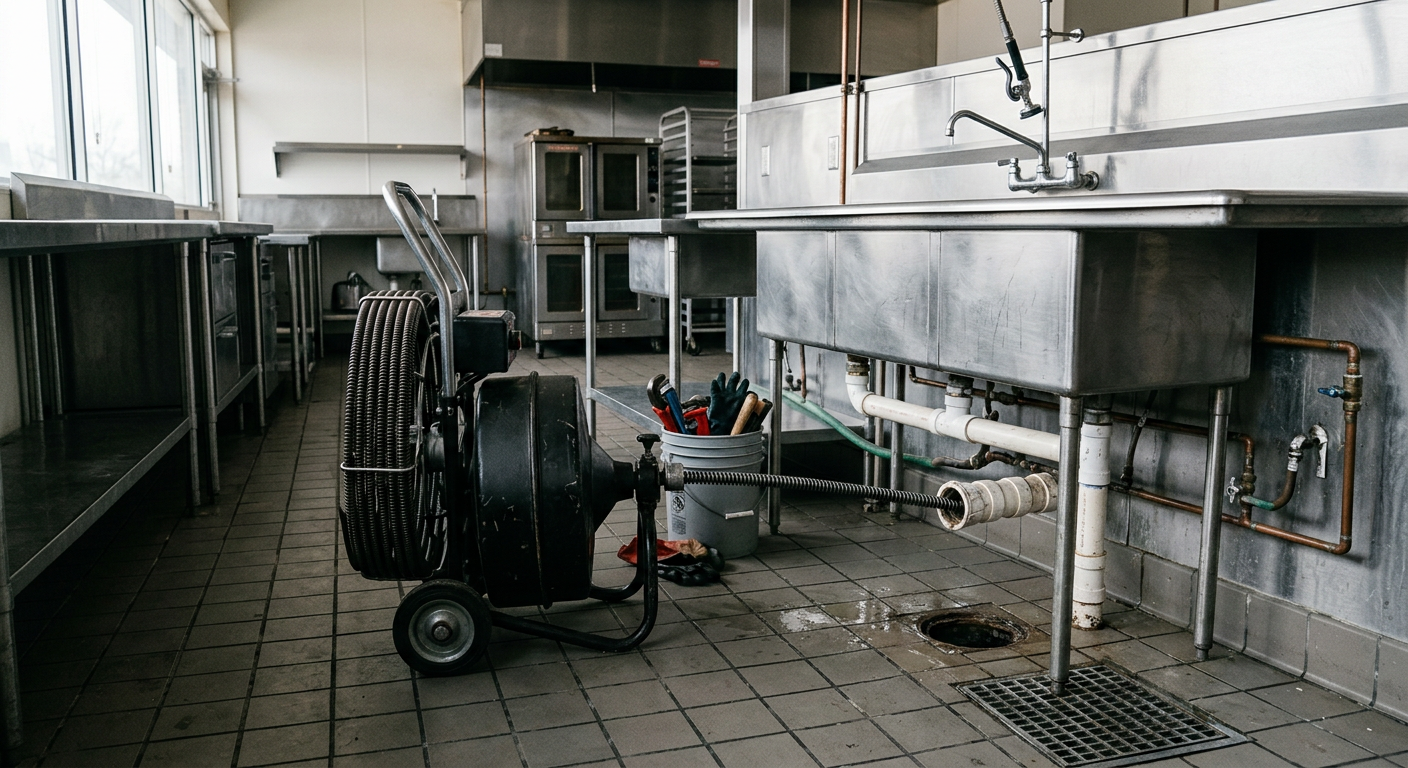
Commercial drain solutions across Aurora, Denver, and Centennial require a rigorous maintenance cadence of every 3 to 6 months to handle heavy volume and strict municipal standards. Commercial sewer systems face significantly higher waste loads than residential properties, creating severe consequences if a backup forces an unscheduled facility closure.
- Restaurants and Food Preparation Facilities: Fats, oils, and grease (FOG) rapidly solidify along main line walls even with grease traps in place. Quarterly mechanical drain cleaning keeps line diameters wide and prevents code violations.
- Multi-Tenant Housing and HOAs: Shared main stacks and lateral collection lines handle unpredictable waste inputs. Scheduling bi-annual rooter service prevents widespread backups across lower-level tenant units.
- Corporate Offices and Retail Complexes: High-capacity commercial restrooms endure heavy paper loads and foreign object flushes, requiring preventative cleaning every 6 to 12 months.
- Industrial and Warehouse Spaces: Wash-down bays and floor drain collection systems accumulate sand, grit, and sludge that necessitate semi-annual heavy-duty cable clearing.
Warning signs that indicate you need service before your scheduled date
Recognizing early physical warning signs allows Aurora property owners to schedule emergency drain cleaning service before a total sewer lateral blockage occurs. Sewer lines rarely clog instantaneously; they give clear operational clues as waste flow becomes restricted.
- Multiple Fixtures Draining Slowly: When sinks, bathtubs, and showers across different rooms drain sluggishly at the same time, the restriction is located in the main lateral rather than an individual trap.
- Gurgling Fixtures and Traps: Bubbling or gurgling noises from toilets or floor drains when running washing machines or dishwashers indicate trapped air displaced by a downstream obstruction.
- Wastewater Rising in Basement Floor Drains: Moisture or sewage odors around lowest-level floor drains during heavy water use signal that wastewater cannot exit freely into the municipal main.
- Frequent Toilet Plunging Requirements: If standard residential toilets require constant plunging despite normal paper use, the main sewer line is likely choked with roots or scale buildup.
How technicians perform thorough rooter and drain cleaning service
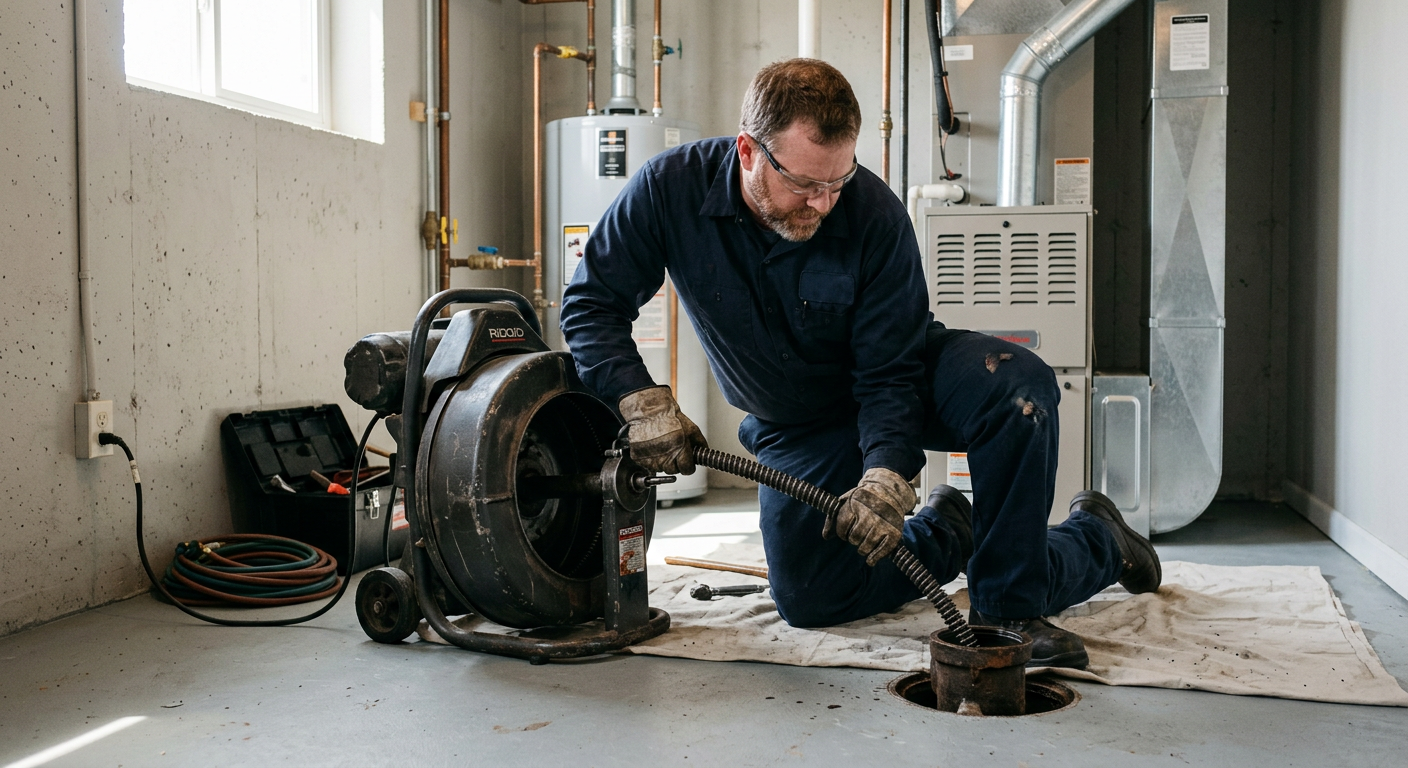
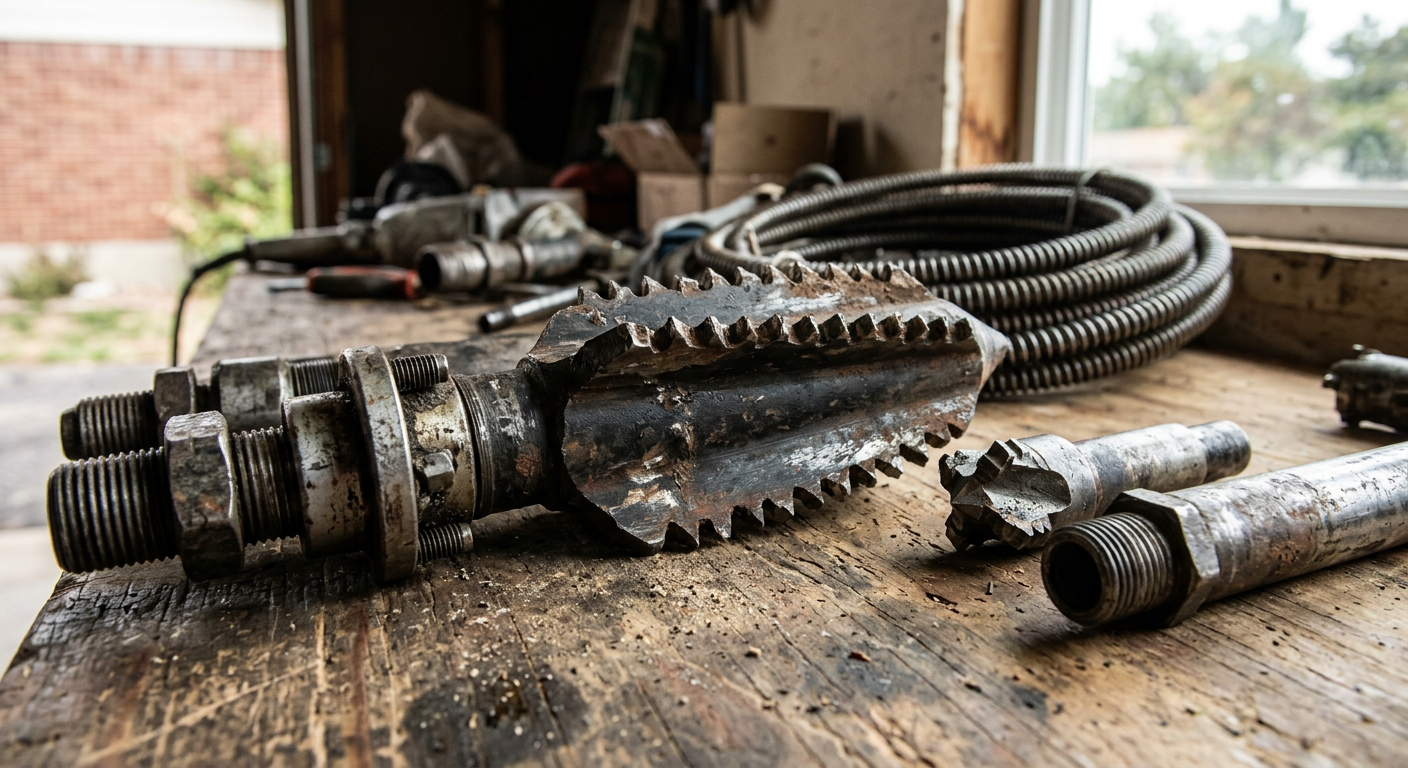
Professional drain cleaning service utilizes heavy-duty mechanical cabling machines equipped with specialized steel cutting heads to scour the full inner circumference of your pipe. Unlike lightweight hardware store rental snakes, industrial rooter machines utilize 3/4-inch continuous inner-core steel cables driven by high-torque electric motors.
A technician inserts these spinning cables through an exterior or basement cleanout fitting. As the cable advances down the lateral toward the city connection, specialized attachments perform targeted clearing tasks. Dual-blade C-cutters and spiral root saws slice through dense root intrusions directly at the pipe wall. Grease-cutting spade heads and retrieving augers scrape congealed fats and snagged rags, pushing pulverized debris outward into the high-volume municipal main. The entire process takes approximately one to two hours and completely restores the lateral's flow capacity.
Establishing an optimal main line cleaning frequency for long-term protection
Maintaining a proper main line cleaning frequency protects your property from expensive structural damage, eliminates foul sewer gas leaks, and extends the operational life of your underground drainage system. Waiting until raw sewage backs up into your basement or business floor creates extensive restoration costs and immediate health hazards that proactive maintenance easily prevents.
By evaluating your property's age, lateral pipe material, tree proximity, and daily wastewater demands, you can establish an accurate service calendar. Whether you manage a busy commercial restaurant near DIA or own an established mid-century home in Aurora, routine professional drain cleaning and rooter service provides absolute peace of mind that your plumbing system will perform reliably throughout every season.
Where we work
Frequently asked questions
- Can I wait until a drain clogs before scheduling main line service?
- Waiting for a total blockage often results in sewage backing up through basement floor drains and tubs, causing property damage. A proactive cleaning schedule clears accumulated debris, soap scum, and hairline root intrusions before wastewater reverses into your home.
- How does tree root intrusion change my sewer maintenance cadence?
- Once tree roots breach a sewer joint, they continue to grow back aggressively. Properties with active root intrusion require dedicated rooter service with mechanical cutting blades every 6 to 12 months to slice away fibrous masses before they create total lateral obstructions.
- What is the typical timeframe required to clean a residential main sewer line?
- A standard residential main line cleaning in Aurora typically takes between 60 and 90 minutes. This includes accessing the sewer cleanout, running heavy-duty mechanical cables through the entire lateral to the municipal connection, and verifying clear flow.
- How often should commercial properties in Aurora schedule drain cleaning?
- Commercial facilities like restaurants, coffee shops, and high-occupancy office buildings should schedule professional drain maintenance every 3 to 6 months. High volumes of food solids, fats, oils, grease, and heavy paper waste cause buildup much faster than residential usage.
Real calls behind this advice
“They did great job cleaning my main sewer line. They were fast and responsive. I will call them again.”
MADOU Guesmi
Main sewer line cleaning · 5 months ago
“We had a main sewer line backup and called On-Call Rooter. They arrived quickly, explained everything clearly, and used a camera to inspect the line before clearing the blockage. They got our main drain flowing again without trying to upsell us.”
Ousama
Main sewer line backup · 2 weeks ago
Where Aurora Drainage Service works from
We dispatch across Aurora and the wider Denver metro, 24 hours a day. Call 720-779-4946 and a tech is usually rolling the same day.
5.0 (59 Google reviews) · Drainage service
Phone: (720) 779-4946
Hours: Open 24 hours
On-Call Rooter LLC drainage service on Google Maps — Aurora, CO