Quick answers
- Freeze-thaw cycles in the Denver metro cause soil shifting that offsets clay sewer pipes and creates standing water pools.
- Cooking fats poured down sinks cool rapidly in sub-freezing soil, forming impenetrable congealed grease blockages.
- Standing water in shallow main lines expands by nine percent when frozen, threatening to crack older clay and cast iron pipes.
- Hydro jetting with heated water effectively scours frozen grease and clears ice without damaging lateral pipe walls.
- Aurora Drainage Service provides emergency 24/7 winter drain clearing across the entire Denver metropolitan area.
Winter drain problems across the Denver metropolitan area stem from extreme atmospheric freeze-thaw cycles, ground soil shifting, and seasonal household waste loads that severely restrict wastewater flow. When temperatures drop below freezing, standing water in shallow main lines or uninsulated crawlspaces rapidly cools, causing congealed cooking fats and trapped debris to solidify into impermeable plugs. Homeowners facing sudden wastewater backups require specialized drain cleaning denver techniques to clear stubborn blockages and restore full lateral drainage before pipe damage occurs. Aurora Drainage Service responds 24/7 at 720-779-4946 to resolve critical winter pipe failures across the region.
The unique geography and climate of the Front Range exacerbate underground pipe vulnerability. Denver sits above expansive bentonite clay soil that absorbs moisture during autumn rain and snowmelt, then expands and contracts as ground temperatures swing dramatically. This mechanical action exerts continuous lateral pressure on buried clay-tile and cast iron sewer pipes, creating offset joints, stress fractures, and low spots called bellies. During the winter months, these structural defects capture wastewater, creating prime conditions for localized ice formation and heavy grease collection that completely choke household sewer laterals.
Furthermore, winter holiday cooking introduces unprecedented volumes of fats, oils, and grease down household sinks. Even when flushed with scalding tap water, fat molecules quickly lose thermal energy as they traverse cold underground piping beneath frost-covered soil. By the time grease reaches the main lateral, it adheres to internal pipe walls, trapping coffee grounds, food particles, and root fibers. Addressing these compound cold-weather challenges requires an understanding of local soil mechanics, thermal dynamics, and professional diagnostic equipment tailored to Colorado homes.
How Colorado Freeze-Thaw Cycles Damage Underground Sewer Lines
Rapid freeze-thaw cycles in the Denver metro cause surrounding expansive clay soil to shift continuously, creating offset pipe joints and structural sags where winter wastewater pools and freezes. The Front Range experiences drastic diurnal temperature shifts, where a sunny afternoon can be followed by a sub-zero overnight freeze. This rapid thermal flux affects topsoil down to the local frost line, which routinely reaches depths of 30 to 36 inches in northern Colorado. As moisture within the soil freezes, it expands by roughly nine percent, lifting and moving shallow lateral lines. When the soil thaws, settling occurs unevenly, pulling apart pipe fittings and altering the pitch required for gravity-fed drainage.
In older neighborhoods across Centennial, Englewood, and Aurora, original vitrified clay or cast iron pipes suffer high rates of shearing under these ground forces. When offset joints develop, root systems from surrounding cottonwood and elm trees enter the gap seeking moisture. During winter, tree roots act as a biological filter, capturing congealed grease and paper products. When temperatures drop significantly, trapped moisture around these obstructions freezes, expanding within the pipe and converting a minor slow-drain issue into a total line burst or severe sewer backup.
Why Winter Cooking Fats Block Main Drain Lines in Denver Homes
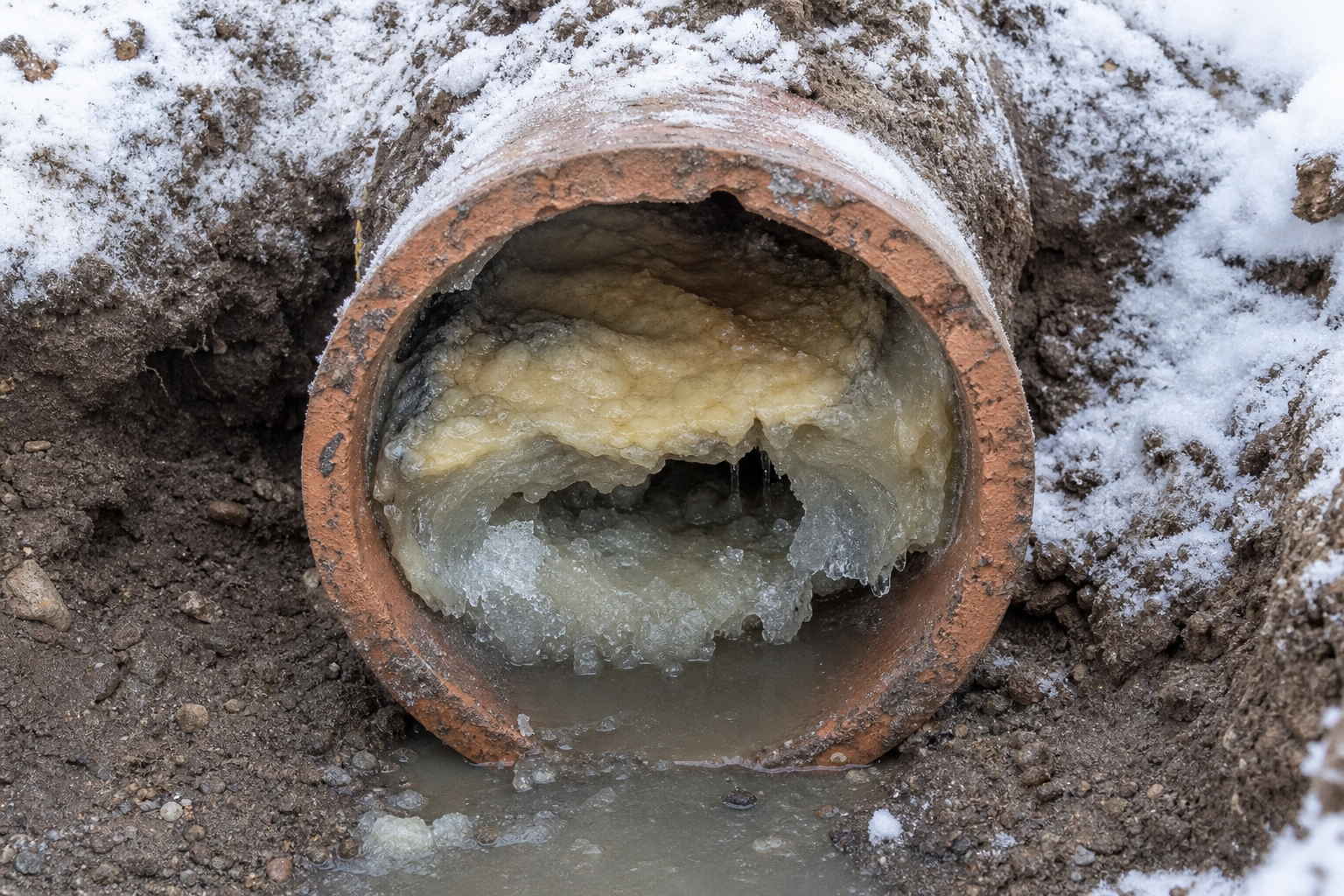
Household cooking grease solidifies rapidly inside underground sewer lines during winter because low ground temperatures absorb thermal energy from drain water, causing liquid fats to coat pipe walls. Many homeowners believe that running hot water while pouring grease down the kitchen sink prevents clogs. However, hot tap water loses its thermal energy within the first ten to fifteen feet of travel through an uninsulated sewer line surrounded by near-freezing soil. As liquid lard, butter, or pan drippings cool past their melting point, they convert from liquid to a tacky, solid wax layer inside the pipe perimeter.
Over several weeks of heavy winter cooking, successive layers of congealed fat narrow the internal diameter of the line. This restriction reduces the velocity of wastewater, forcing solid toilet waste and paper to settle prematurely inside the horizontal branch lines. In severe cases, congealed grease combines with calcium deposits in hard Denver tap water to form dense saponified fat deposits that cannot be cleared with household plungers or retail chemical drain products. Aurora Drainage Service utilizes specialized high-pressure equipment to scour these hardened fat layers clean without harming older pipe materials.
Identifying Frozen Drain Line Symptoms Versus Structural Main Sewer Blockages
A frozen drain line displays localized ice blockages or frost near foundation walls and vent stacks, whereas a structural main sewer failure causes immediate multi-fixture backups across all lower-level drains. Distinguishing between thermal ice blockages and structural sewer line collapse is essential for selecting the correct repair protocol. When an uninsulated drain line running through an exterior wall or crawlspace freezes, affected fixtures directly upstream will stop draining, while other fixtures on separate plumbing branches continue to discharge normally. Ice blockages often exhibit visual frost on exposed pipe sections or produce distinct hollow sounds when tapped.
Conversely, a main line sewer blockage affects the entire structure simultaneously. Flushing a main floor toilet will cause dirty water to surge upward through the lowest basement shower, bathtub, or floor drain. If wastewater appears in lower fixtures whenever washing machines discharge, the blockage is situated downstream in the main lateral line rather than an isolated branch. Homeowners experiencing sudden multi-fixture backups during sub-freezing weather should seek emergency drain cleaning near me from qualified professionals equipped with thermal imaging and fiber-optic diagnostic cameras.
Warning Indicators of an Impending Underground Pipe Collapse
Persistent gurgling sounds from lower level drains, soil indentations in the yard during winter thaws, and recurring sewage odors inside crawlspaces indicate structural pipe deterioration beneath the frost line. When underground pipe sections fracture due to soil expansion, wastewater escapes into the surrounding dirt, causing local erosion under driveway slabs or lawns. During brief winter thaws, this erosion creates visible sinkholes or localized patches of melted snow directly above the warm sewer path. Indoors, sewer gas escapes through fractured joints and enters living spaces through dried-up floor drain traps or cracked vent pipes. Addressing these warning signs immediately prevents complete pipe collapse and structural property damage.
Can a frozen drain line burst underground sewer pipes in Denver?
Yes, standing water inside a shallow or offset drain line can expand when ground temperatures fall below freezing, causing rigid clay or plastic pipes to crack. When water freezes, it expands by approximately nine percent, exerting massive outward pressure on trapped lateral lines throughout the Denver metro area.
| Issue Type | Primary Root Cause | Observable Symptoms | Recommended Solution |
|---|---|---|---|
| Frozen Pipe Branch | Cold air infiltration through crawlspaces or vents | Single fixture slow drain, frost on exposed lines | Thermal thawing and pipe insulation installation |
| Congealed Holiday Grease | Sub-cooling of fat molecules in cold main lateral | Kitchen sink gurgling, slow main floor drainage | High-pressure hot water hydro jetting |
| Frost-Heave Pipe Offset | Expansive clay soil expansion during freeze cycles | Multi-fixture basement sewage backups | Camera inspection and trenchless pipe lining |
| Ice-Plugged Roof Vent | Sub-zero air freezing sewer vapors at roof line | Toilet bubbling, slow drainage across entire house | Steam clearing of vent stack and frost cap removal |
Step-by-Step Response Protocol for Winter Drain Cleaning Denver
Professional technicians follow a systematic sequence involving mechanical inspection, thermal thawing, hydro scouring, and camera verification to safely clear winter drain blockages in Colorado homes. Resolving cold-weather drainage emergencies requires precise execution to avoid shattering cold, brittle pipes. Aurora Drainage Service implements a field-tested protocol designed specifically for Front Range winter conditions:
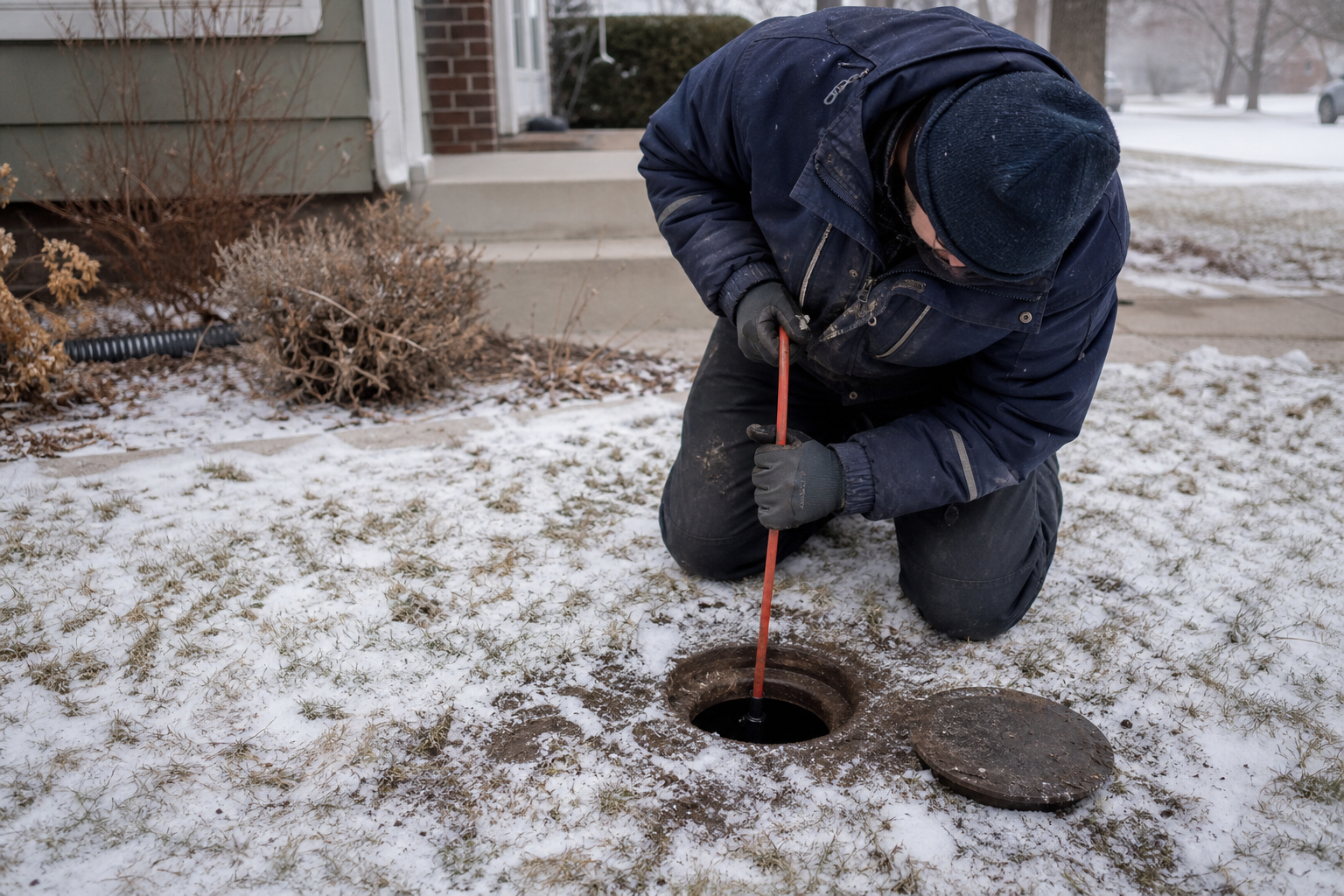
- Initial Cleanout Diagnostic and Thermal Check: Technicians inspect the main sewer cleanout, measuring internal line temperature and checking for visible ice or frozen caps before inserting equipment.
- Fiber-Optic Camera Survey: A heated camera probe is guided down the line to locate the exact position of grease accumulations, root masses, or ice blockages while assessing structural pipe integrity.
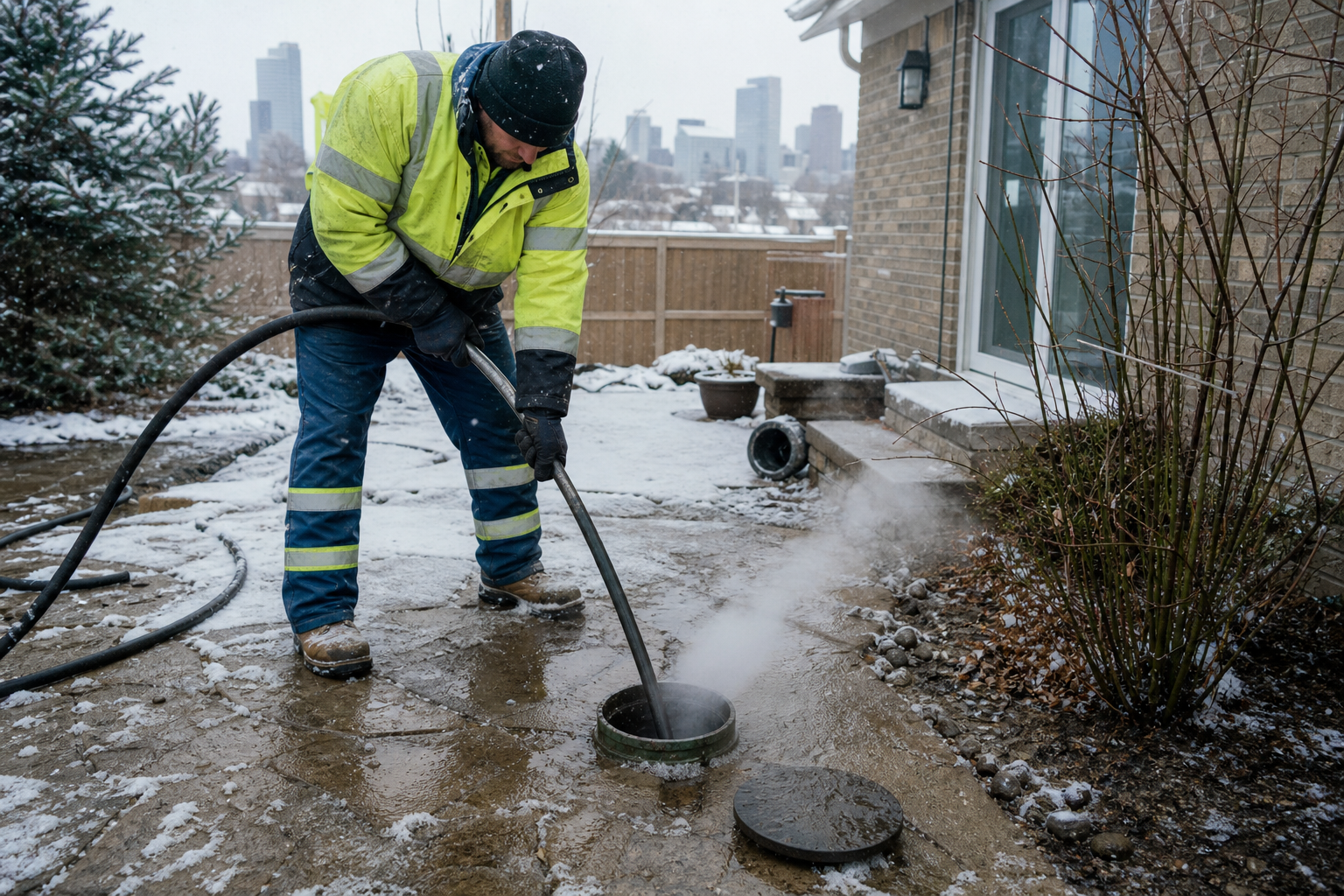
- Mechanical Cabling or Hot-Water Hydro Jetting: Depending on pipe material and blockage density, technicians deploy continuous cable machines with cutting head attachments or high-pressure hydro jetting rigs to slice through congealed grease and clear standing ice.
- Comprehensive Pipe Flushing and Debris Removal: High-velocity water flushes all emulsified fats, roots, and ice fragments through to the municipal sewer main, preventing downstream re-clogging.
- Final Camera Verification and Slope Analysis: A secondary camera inspection confirms total blockage removal and evaluates horizontal pipe pitch to identify low spots vulnerable to future winter freezing.
Why do kitchen drain lines clog more frequently during Denver winter holidays?
Kitchen drain lines clog more during winter holidays because households pour higher volumes of fat and rendered grease down sinks, where sub-freezing soil temperatures rapidly cool and congeal the fats before they reach municipal main lines.
Environmental Factors Accelerating Winter Pipe Damage in Denver Suburbs
Shallow lateral pipe depth, severe clay soil swelling, and uninsulated roof vent stacks are the primary environmental factors accelerating winter drain failures across Denver suburbs. In many older residential developments built throughout the mid-twentieth century across Wheat Ridge, Arvada, and Denver, lateral drain lines were buried at depths ranging from 24 to 36 inches. This shallow burial depth places pipes directly within the active frost zone during extended cold spells. When arctic air masses settle over the Denver basin, ground frost penetrates deep enough to freeze standing water inside sagging pipe sections. Homeowners undergoing property transactions or dealing with chronic cold-weather blockages should review a comprehensive sewer camera inspection guide for Denver buyers to evaluate underground lateral depth and condition before winter weather arrives.
Additionally, plumbing vent stacks protruding through residential roofs act as cooling towers in extreme winter weather. Warm, moist sewer air rising through the stack meets sub-zero ambient air at the roof line, forming frost rims inside the pipe. Over several days of severe freeze, frost accumulates until it completely seals the vent opening. Without atmospheric pressure equalization, drains inside the house lose siphon power, leading to slow drainage, gurgling toilets, and trapped sewer odors in living quarters.
How does hydro jetting resolve winter grease blockages in sewer pipes?
Hydro jetting uses high-pressure water streams reaching up to 4,000 PSI to slice through congealed grease deposits and flush remaining debris completely out of the lateral line. The high-velocity water scours the internal pipe walls clean, removing years of accumulated fat and restoring original flow capacity without damaging structural pipe walls.
Cost Determinants for Winter Drain Cleaning Denver Services
The overall cost for winter drain cleaning in Denver depends on blockage severity, pipe depth, thermal equipment requirements, and cleanout accessibility during freeze conditions. Emergency winter plumbing services involve specific technical challenges that influence final service pricing. When cleanouts are buried beneath snow or frozen topsoil, technicians must spend additional labor locating and excavating access points. If a main line contains dense ice plugs alongside saponified grease, specialized hot-water hydro jetting units must be deployed, which carries different operational requirements than basic mechanical cable snaking.
On average, standard residential drain snaking for localized winter clogs ranges between $175 and $350, while full main sewer line hydro jetting and camera diagnostic services typically range between $450 and $950 depending on line length and line condition. Aurora Drainage Service provides transparent, up-front pricing without hidden fees, ensuring Denver homeowners understand all diagnostic findings before work begins. For urgent service calls, seeking an experienced provider offering emergency drain cleaning near me ensures fast technician arrival, minimizing property damage from backed-up sewage. Aurora Drainage Service provides full plumbing coverage throughout the Denver metropolitan area with emergency dispatch available day or night at 720-779-4946.
Questions Aurora homeowners ask us
- Can a home drain line freeze if the heat inside the house is turned off?
- Yes, turning off interior heat allows ambient indoor air temperatures to drop below freezing, causing standing water in P-traps, toilet tanks, and exposed crawlspace pipes to solidify into ice plugs. Homeowners leaving properties vacant during Colorado winters should maintain indoor thermostat settings at 55 degrees Fahrenheit or higher.
- How can Denver homeowners prevent grease from freezing inside drain pipes during the winter?
- Denver homeowners should collect liquid fat, oils, and pan drippings in disposable containers rather than pouring them down sink drains. Wiping greasy cookware with paper towels prior to washing prevents thermal fat accumulation on cold lateral pipe walls during winter freezes.
- What should I do if my sewer roof vent pipe freezes over during a cold wave?
- If atmospheric sewer vents freeze shut at the roof line, homeowners should contact professional drainage technicians to safely clear the ice cap using hot water or steam application. Attempting to climb icy roofs during winter conditions presents extreme personal injury hazards.
- Is chemical drain cleaner safe to use in frozen underground sewer pipes?
- No, chemical drain cleaners should not be used in frozen pipes because chemical solutions cannot melt structural ice blockages and will pool behind the frozen barrier. Standing caustic chemicals create severe chemical burn risks for plumbing technicians performing mechanical clearing and can damage older metal pipes.
- How deep are sewer lines buried in Denver to protect against frozen soil?
- Residential sewer laterals in the Denver metro area are typically buried between four and six feet below ground level to stay beneath the regional frost line. However, older residential installations or areas affected by severe soil erosion may feature shallower pipes vulnerable to cold-weather freezing.
Where Aurora Drainage Service works from
We dispatch across Aurora and the wider Denver metro, 24 hours a day. Call 720-779-4946 and a tech is usually rolling the same day.
Drainage service
Phone: (720) 779-4946
Hours: Open 24 hours
On-Call Rooter LLC drainage service on Google Maps — Aurora, CO