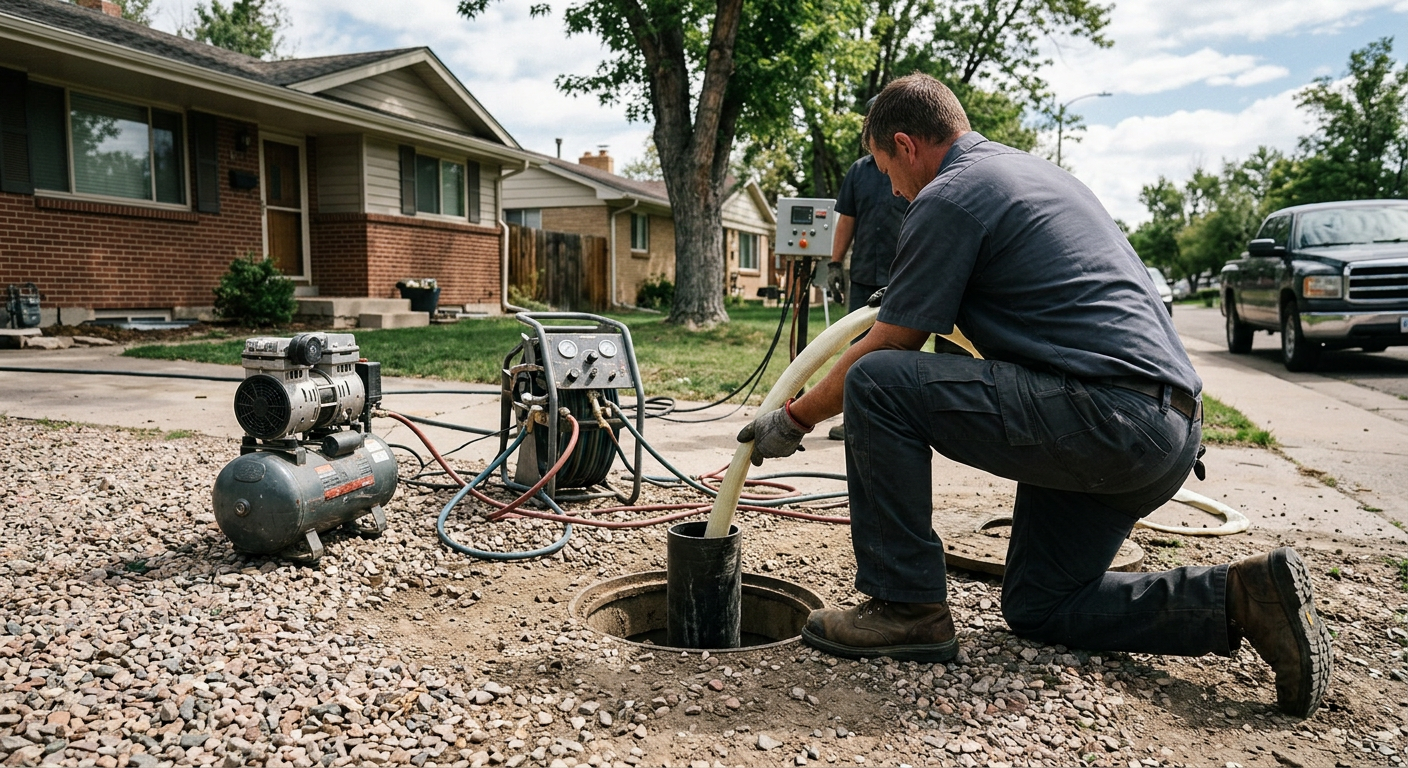
Trenchless sewer repair rehabilitates or replaces underground sewer pipes through small access points rather than continuous open trenches. For Denver homeowners, technicians primarily deploy two distinct methods: Cured-in-Place Pipe (CIPP) lining, which builds an epoxy pipe within the existing lateral, and pneumatic or hydraulic pipe bursting, which pulls new seamless HDPE pipe through fractured lines.
Key takeaways
- Cured-in-Place Pipe (CIPP) lining restores structural strength inside existing host pipes without digging up landscaping or driveways.
- Pipe bursting physically fractures compromised clay or cast iron lines while simultaneously pulling a seamless high-density polyethylene (HDPE) replacement pipe into place.
- Expansive bentonite clay soils across the Denver metro area require careful grade and alignment checks before approving trenchless methods.
- Severe structural pipe collapses, severe pipe bellies, and reverse slopes disqualify a line from lining and may require targeted excavation.
- Comprehensive sewer camera inspections and mechanical descaling are required prerequisites for any trenchless rehabilitation project.
For homeowners evaluating trenchless sewer repair denver options, understanding the exact mechanical process prevents unnecessary property destruction and costly drainage failures. Underground residential sewer laterals in established Denver neighborhoods face persistent stress from heavy clay soils, shifting ground temperatures, and aggressive tree roots. When these lines develop structural cracks or chronic root infiltration, trenchless rehabilitation offers a way to restore structural integrity without tearing out mature trees, concrete patios, or finished driveways.
What makes trenchless sewer repair denver homeowners rely on technically viable for aging infrastructure?
Trenchless sewer repair in Denver succeeds because modern cured resins and high-density polyethylene materials create seamless, root-proof barriers within existing pipe corridors. Older residential areas across Denver—ranging from historic brick bungalows in Washington Park to mid-century ranch homes in nearby neighborhoods—frequently rely on vitrified clay or aging cast iron sewer laterals. Over decades, joint displacement and corrosion create pathways for underground leaks and repeated main line backup emergencies.
Rather than opening a continuous trench from the foundation wall to the municipal main in the street, no-dig technologies operate through small insertion pits or existing cleanout access points. Technicians use specialized hydraulic pullers or pneumatic inversion drums to insert structural materials directly through the compromised corridor. This approach isolates the work to precise entry points, preserving landscaping and hardscaping above ground while renewing underground flow dynamics.
How cured-in-place pipe lining creates an epoxy sleeve inside host sewer pipes
Cured-in-place pipe (CIPP) lining installs an epoxy-saturated fabric tube inside an existing sewer pipe, curing it in place to form a jointless pipe within a pipe. This method is especially popular in Denver homes where the host lateral remains structurally aligned but suffers from micro-cracking, missing mortar joints, or persistent root intrusion sewer issues.
Pipe preparation and camera verification before resin insertion
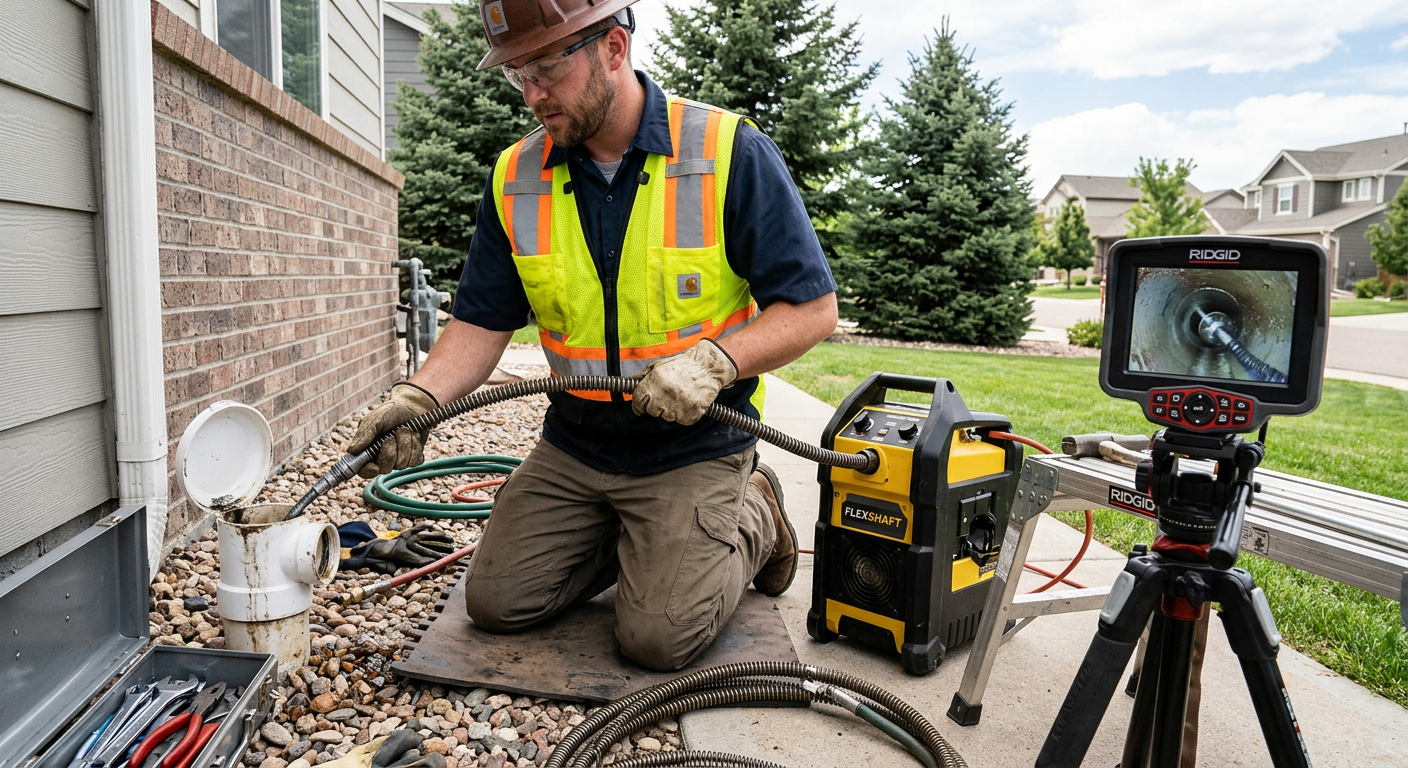
Field technicians must thoroughly descale and hydro jet the host line before inserting any CIPP liner. If loose scale, grease layers, or calcified deposits remain on the pipe walls, the epoxy resin cannot create a uniform structural bond with the perimeter of the pipe. Technicians use high-torque mechanical chain knockers and high-pressure water nozzles to scrub the interior surface down to bare substrate, referencing our field guide on hydro jetting versus snaking main lines for deep cleaning standards.
Inversion and ambient or steam curing mechanisms
During installation, the resin-wetted felt tube is inverted into the sewer lateral using compressed air pressure. As the bladder inflates, it presses the epoxy-saturated felt firmly against the internal walls of the host pipe, following every contour and bridging hairline fractures. Once the tube is fully inflated, technicians introduce ambient air circulation, hot water, or pressurized steam to accelerate the chemical cross-linking of the epoxy resin. After hardening, technicians cut out the internal calibration bladder and re-inspect the line with a diagnostic camera to confirm a smooth, impervious interior.
Why continuous high-density polyethylene bursting suits heavily deformed or fractured sewer laterals
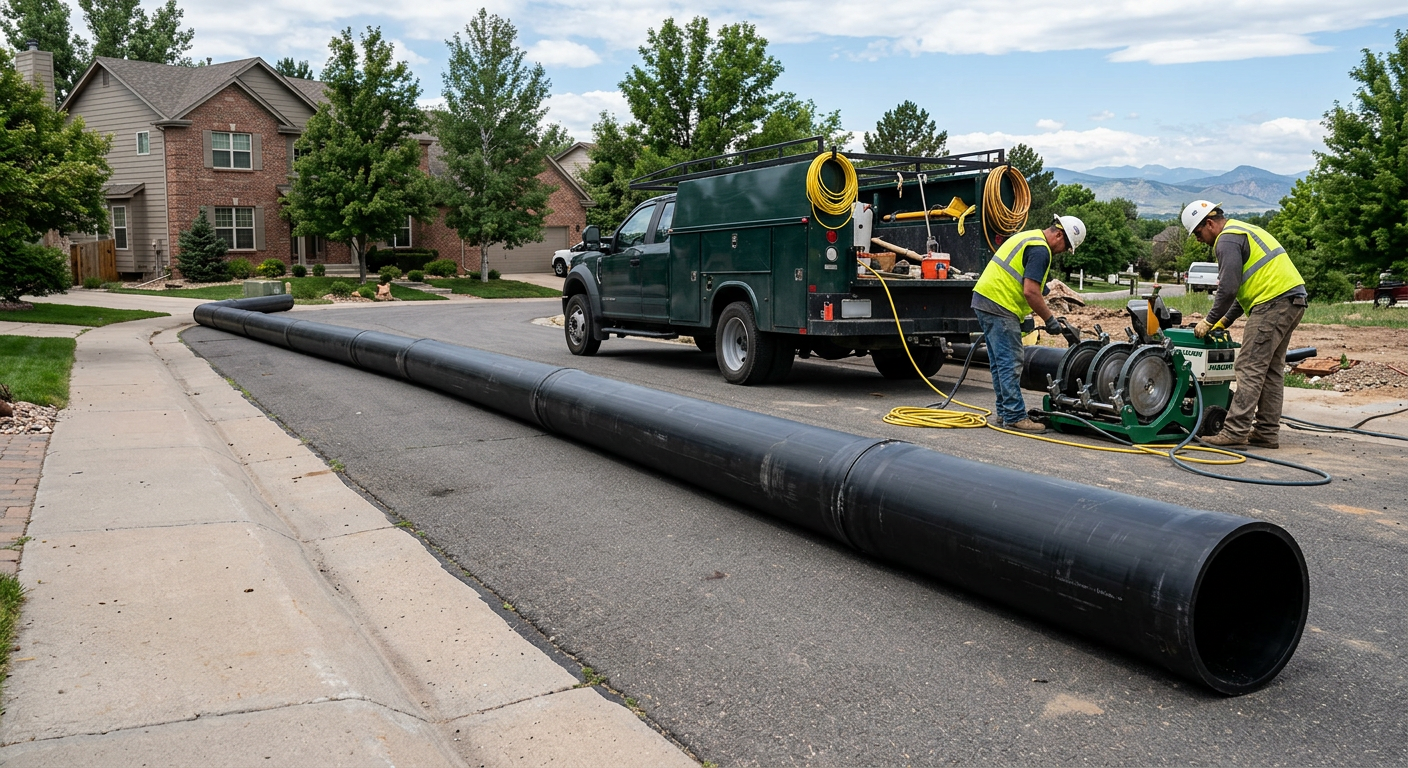
Pipe bursting replaces completely deteriorated sewer lines by pulling a high-strength bursting head through the damaged pipe to fracture it outward while simultaneously installing a seamless HDPE pipe. When an older property requires a full clay sewer pipe replacement due to multiple collapsed sections, severe wall loss, or extensive shearing, CIPP lining is often not structurally viable. Pipe bursting provides a brand-new structural pipe rather than relying on the host pipe for support.
The mechanical process requires two small access excavations: an insertion pit where the new pipe enters the ground and a receiving pit near the connection to the municipal main or foundation cleanout. A heavy-duty steel pulling cable is threaded through the existing lateral and attached to a conical, hardened steel bursting head. Behind this head, technicians fuse continuous lengths of High-Density Polyethylene (HDPE) pipe using thermal butt-fusion equipment. As the hydraulic pulling unit exerts tons of pulling force, the expander head shatters the brittle clay or corroded cast iron, pressing the fragments into the surrounding subsoil and positioning the new HDPE line along the exact original grade.
Physical and geological indicators that dictate trenchless suitability across Front Range soils
Trenchless sewer viability depends heavily on the structural grade of the existing lateral and the stability of the surrounding soil matrix. Denver is known for bentonite clay formations that swell when saturated and shrink during dry spells. This soil movement can create pipe bellies—low points where wastewater pools and drops heavy solids—or severe back-pitching where wastewater flows away from the main.
- Host Pipe Alignment: The line must maintain a steady downward pitch of at least one-eighth to one-quarter inch per foot. CIPP lining conforms to existing dips; it will not correct a low belly.
- Structural Collapse Severity: If more than thirty percent of a pipe section has collapsed inward, bursting heads or lining bladders cannot pass without localized spot excavation.
- Proximity to Other Utilities: High-tension pipe bursting expands the surrounding soil by several inches during the pull, requiring adequate clearance from shallow gas, water, or electrical conduits.
- Host Material Ductility: Brittle materials like vitrified clay, unreinforced concrete, and corroded cast iron burst cleanly, whereas ductile iron or heavy schedule steel may require alternative cutting heads.
- External Discharge Interference: Technicians must verify that lines tied into a sump pump discharge line or related basement water systems do not compromise sewer access points.
Comparing trenchless methodologies against conventional open-trench replacement
Comparing trenchless methods with traditional open excavation shows marked differences in site disruption, installation speed, and long-term joint integrity. While open trenching remains necessary for severely back-pitched lines or shallow utility corridors, trenchless methods significantly reduce secondary restoration expenses for driveways, retaining walls, and custom landscaping.
| Method | Primary Use Case | Ground Disruption | Average Install Time | Structural Mechanism |
|---|---|---|---|---|
| CIPP Lining | Cracked, root-invaded, or moderately corroded laterals | Minimal (uses cleanout or small pit) | 1 working day | Epoxy resin felt sleeve inside host pipe |
| Pipe Bursting | Collapsed, heavily sheared, or undersized clay/cast pipes | Low (requires two small entry/exit pits) | 1 to 2 working days | Seamless HDPE pulled through fractured host |
| Open Trench Excavation | Severe pipe bellies, reverse slope, or complete soil voids | High (continuous trench across property) | 2 to 4 working days | Direct replacement with PVC or SDR-35 pipe |
Technical inspection steps technicians use before approving a no-dig sewer installation
A certified sewer camera inspection provides the precise structural data needed to determine if a Denver home qualifies for trenchless repair. Technicians push a high-definition, self-leveling optical camera through the entire length of the lateral, from the home cleanout to the city sewer connection in the street or alley. This diagnostic process is similar to a thorough sewer scope before buying a house, verifying structural integrity before financial commitments are made.
- Continuous Video Mapping: The technician records footage while noting exact footages of joint separations, offset connections, cracks, and root intrusion points.
- Sonde Location and Depth Tracking: A radio transmitter (sonde) inside the camera head communicates with an above-ground locator to pinpoint pipe depth and exact geographic trajectory across the yard.
- Elevation and Grade Verification: Technicians check the video for standing water to confirm the pipe has adequate slope and does not suffer from settled dips or structural bellies.
- Tie-in Identification: The camera locates any active branch connections, such as secondary basement bathrooms or exterior storm drain installation tie-ins, which must be reinstated after lining.
Selecting the appropriate no-dig repair for your Denver property
Choosing the best trenchless sewer repair denver property owners need depends on an accurate camera evaluation, the physical condition of the host pipe, and the layout of the yard. Homeowners facing recurring backups or searching for drain cleaning near me often discover that routine cabling only provides temporary relief when structural defects are present. You can find more diagnostic strategies and homeowner guides across our drainage and sewer blog archive.
When the underlying pipe retains its circular profile and proper downward slope, CIPP epoxy lining offers a fast, minimally invasive rehabilitation that seals away root penetrations for good. If the existing line has suffered structural breaks, severe offsets, or pipe wall crushing from expansive soils, pipe bursting delivers a seamless, heavy-duty HDPE replacement without trenching through your property. Consulting with an experienced drainage technician ensures you select the correct mechanical method for long-term sewer reliability.
Where we work
Frequently asked questions
- How long does a trenchless sewer repair take on a Denver property?
- Most residential trenchless sewer projects in Denver take between one and two working days to complete from initial cleaning to final camera verification, depending on access point excavation and resin curing schedules.
- Will trenchless pipe lining reduce the diameter of my sewer lateral?
- CIPP lining reduces the internal diameter by approximately one-quarter of an inch, but the smooth epoxy interior significantly improves hydraulic flow coefficients, offsetting the minor dimension change.
- Can pipe bursting handle severe root intrusion in older clay pipes?
- Yes, pipe bursting easily handles severe root intrusions because the hardened bursting head fractures the host clay pipe and surrounding root masses outward into the surrounding soil as the new HDPE pipe is pulled in.
- What happens if my sewer pipe has a severe belly or back-pitch?
- Trenchless CIPP lining conforms directly to the host pipe and cannot fix grade issues or sags. If a pipe has a severe belly, localized open-trench excavation is required to re-establish the proper downward slope before any rehabilitation.
Real calls behind this advice
“We recently moved into our house and decided to have all our drains cleaned. On-Call Rooter cleaned our sink, shower, and kitchen drains, performed a sewer line scope and inspection, and rootered our main sewer line. Everything is flowing great now. Highly recommend.”
Kass M
Whole-home drain clean and sewer scope · 3 months ago
“Great prompt service. Came out with 30 mins of needing him and he got our sewer system unclogged. He explained everything he was doing and told us a game plan for what is needed. Great service and would definitely use again.”
Brandon Allison
Sewer system unclogged · 9 months ago
Where Aurora Drainage Service works from
We dispatch across Aurora and the wider Denver metro, 24 hours a day. Call 720-779-4946 and a tech is usually rolling the same day.
5.0 (59 Google reviews) · Drainage service
Phone: (720) 779-4946
Hours: Open 24 hours
On-Call Rooter LLC drainage service on Google Maps — Aurora, CO