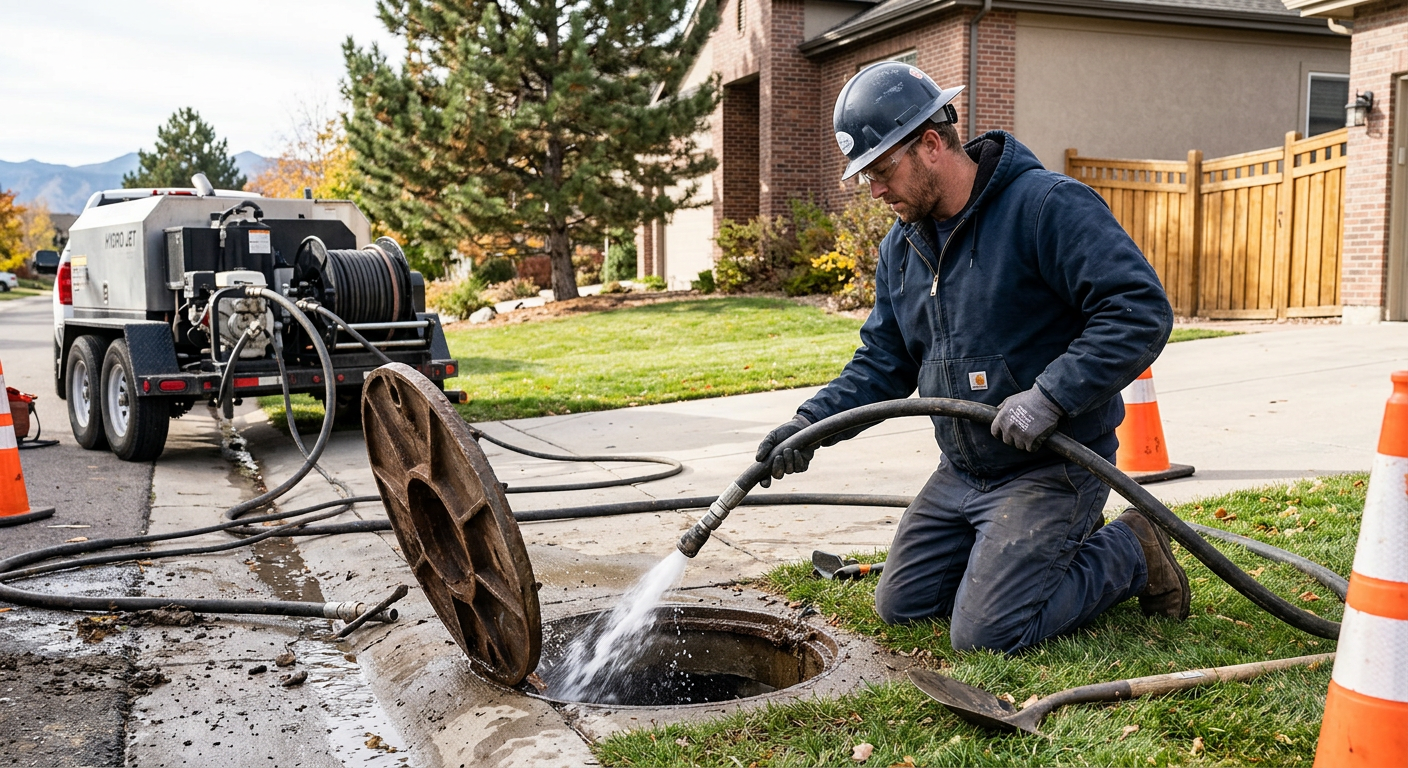
Mechanical snaking punches through acute localized clogs using a rotating steel cable, whereas hydro jetting scours the entire interior pipe circumference using water pressurized up to 4,000 PSI. While snaking quickly restores flow during an active emergency, hydro jetting removes heavy grease buildup, mineral scale, and intrusive tree root mats to provide long-term lateral restoration.
Key takeaways
- Mechanical drain snakes excel at boring relief holes through soft blockages and foreign object obstructions.
- Hydro jetters clear 100 percent of the pipe's internal diameter by flushing out grease, sediment, and root masses.
- A sewer camera inspection is vital before jetting to ensure older clay or brittle pipes can withstand high pressure.
- Snaking averages $175 to $450 in the Denver-Centennial area, while comprehensive hydro jetting ranges from $400 to $900 or more.
- Recurring root intrusion or structural pipe displacement may require rehabilitation rather than routine maintenance.
When facing a stubborn main line backup, homeowners in Centennial often ask field technicians to explain the practical differences between hydro jetting vs snaking. Choosing the right clearing method determines whether your main sewer line experiences immediate, temporary relief or a long-lasting restoration of its full flow capacity. At Aurora Drainage Service, our technicians evaluate underground lateral conditions across Centennial and surrounding metro communities to deploy the most effective tool for the obstruction at hand. For additional plumbing maintenance tips and field advice, explore our Aurora Drainage Service blog archive.
How do hydro jetting and snaking mechanics perform against main line obstructions?
Aurora Drainage Service deploys mechanical snaking machines and high-pressure hydro jetters as distinct tools designed for specific subterranean drainage challenges. While both methods enter the plumbing system through an accessible exterior cleanout or basement cleanout tee, their mechanical actions inside the pipe are fundamentally different.
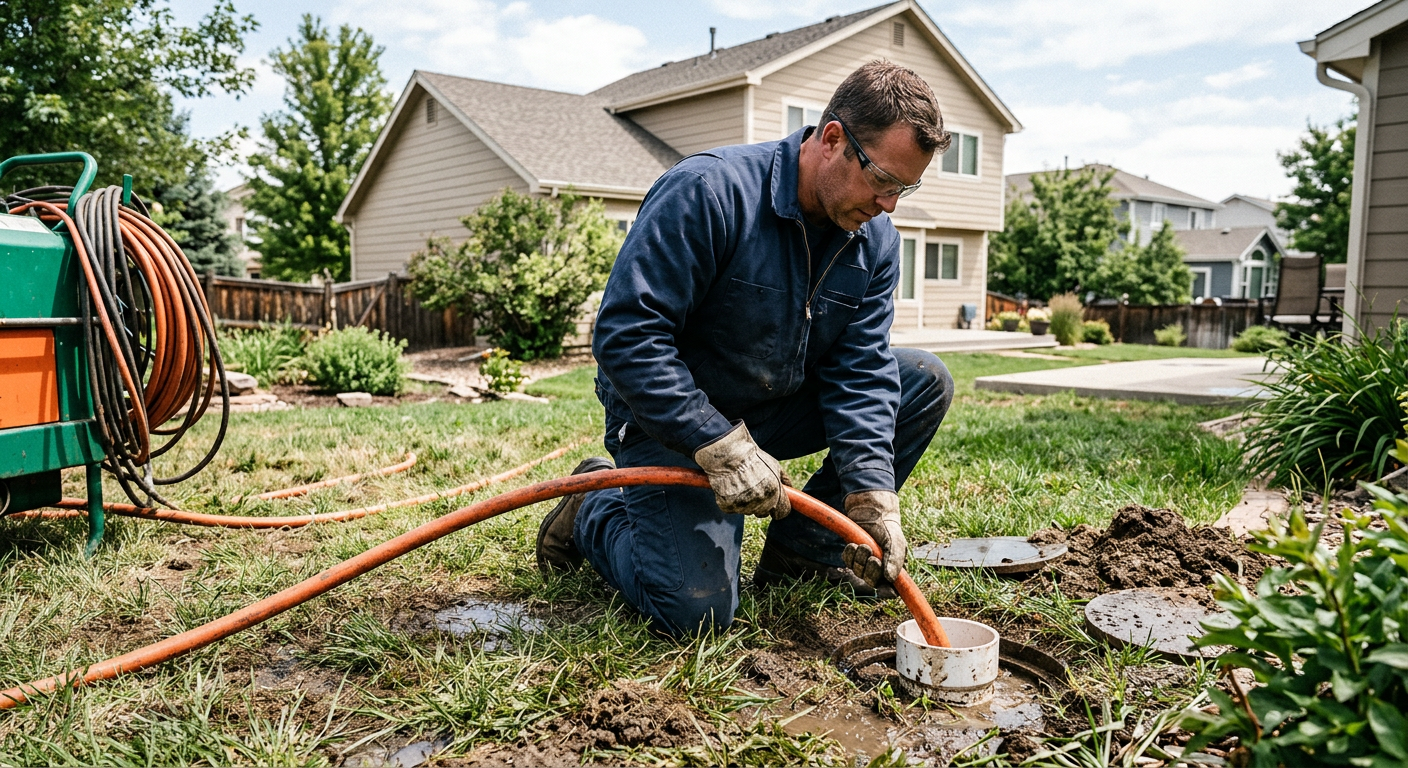
How spinning steel blades cut localized clogs in residential laterals
Mechanical drain snaking utilizes a motorized drum that feeds a flexible steel cable tipped with specialized cutting heads directly into the pipe. As the cable rotates at high speed, C-cutter or spade-blade attachments punch through solid obstructions like compacted paper, sanitary wipes, or foreign debris. Snaking acts like a subterranean drill, carving an opening through the center of the blockage so accumulated water can drain away, but it generally leaves residue clinging to the pipe walls.
How pressurized water streams emulsify grease and scale from pipe walls
Hydro jetting relies on high-velocity water delivered through a reinforced hose at operating pressures between 3,000 and 4,000 PSI to scrub pipe walls clean. The specialized nozzle features forward-facing jets to break apart stubborn debris and multiple rear-facing jets that pull the hose forward while flushing loosened waste backward out of the lateral. This 360-degree scouring action strips away solidified cooking fats, mineral deposits, and soft sediment, returning the line to its original interior diameter.
Comparing hydro jetting vs snaking across typical underground blockage scenarios
The choice between hydro jetting vs snaking depends heavily on what material is obstructing the Centennial sewer pipe and the overall condition of the host line. While snaking serves as a fast emergency response for dense, localized blockages, hydro jetting provides a comprehensive cleaning that prevents near-term recurring backups.
| Feature / Condition | Mechanical Snaking | High-Pressure Hydro Jetting |
|---|---|---|
| Primary Action | Bores relief holes through center of clog | Scours 100% of internal pipe wall circumference |
| Grease & Fat Buildup | Punches through but leaves grease on walls | Emulsifies and completely flushes grease away |
| Tree Root Penetration | Cuts narrow path through root masses | Shears roots flush against pipe joints |
| Mineral Scale & Silt | Largely ineffective against hard scale | Blasts away scale, calcification, and mud |
| Pipe Safety Consideration | Safe for older pipes with hairline cracks | Requires structural camera check on aged lines |
| Centennial Typical Cost | $175 to $450 depending on access | $400 to $900+ depending on severity and run |
Homeowners seeking drain cleaning near me during an active sewage overflow often benefit from an initial cable clearing to restore critical plumbing usage before assessing whether hydro scouring is needed. If the line suffers from deep root intrusion sewer complications, snaking merely postpones another blockage because the remaining root collars continue to grow inside the moist pipe environment.
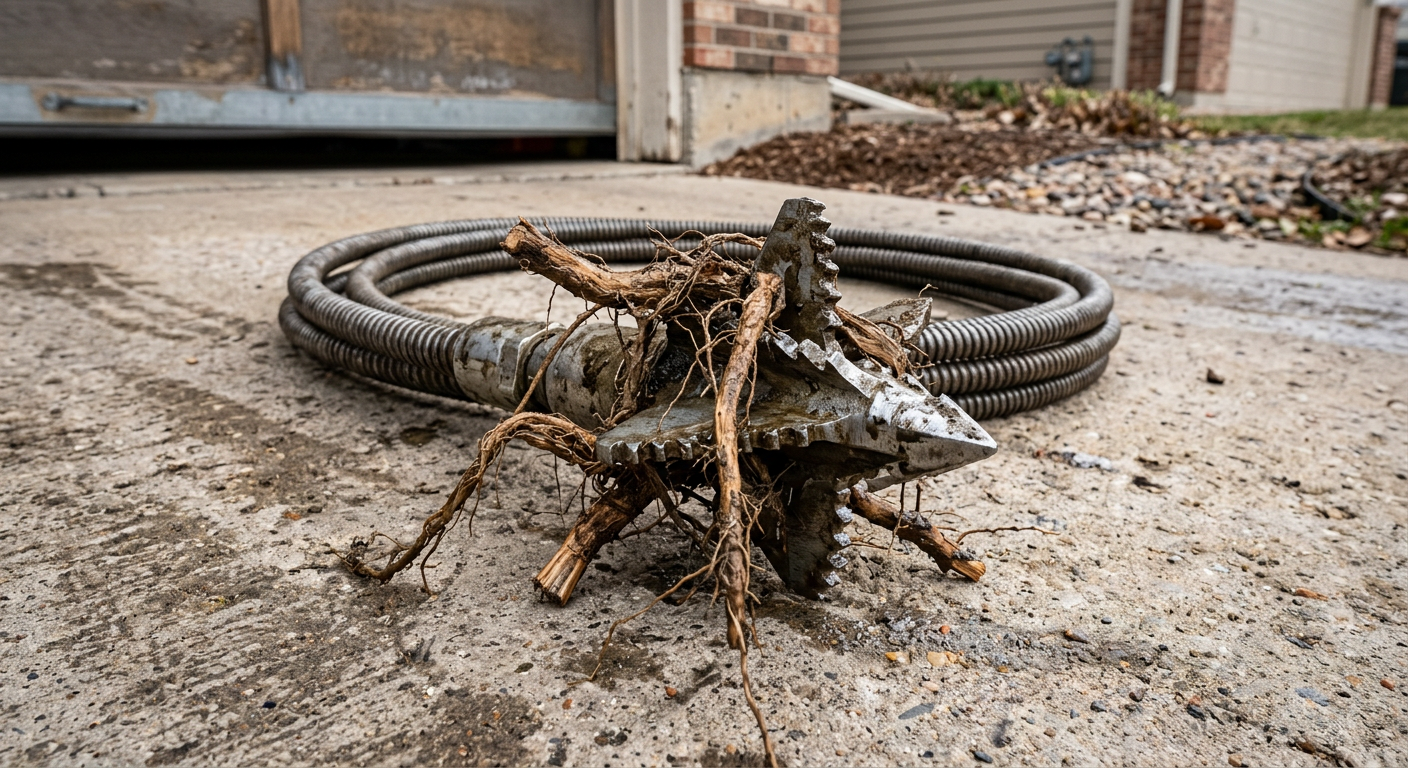
What homeowner expenses are typical for mechanical rodding versus hydro scrubbing across the Denver metro area?
Centennial homeowners can generally expect standard mechanical drain snaking to range from $175 to $450, while professional hydro jetting typically ranges from $400 to $900 or more across the Denver metro region. Final pricing varies according to the accessibility of the cleanout, the total length of the sewer run, and the severity of the obstruction.
- Cleanout Accessibility: Working from a ground-level exterior double-sweep cleanout is faster and less labor-intensive than removing a basement toilet or pulling a roof vent.
- Run Distance to Main: Clearing a 30-foot run to the property boundary takes less time and equipment setup than navigating a 120-foot run beneath mature landscaping.
- Obstruction Density: Heavy mineral calcification, hardened grease caps, or multiple dense root clusters require extended nozzle passes, which increases overall on-site labor.
- Diagnostic Camera Verification: Combining clearing with an internal video assessment provides visual proof of cleaning success but adds an equipment diagnostic fee.
Why field technicians perform a camera assessment prior to applying pressurized water
Aurora Drainage Service conducts a diagnostic camera evaluation prior to hydro jetting to protect fragile or compromised sewer laterals from unintended structural damage. Injecting water at 4,000 PSI into a pipe with missing sections, severe fractures, or collapsed crowns can wash out surrounding bedding soil and worsen the structural failure.
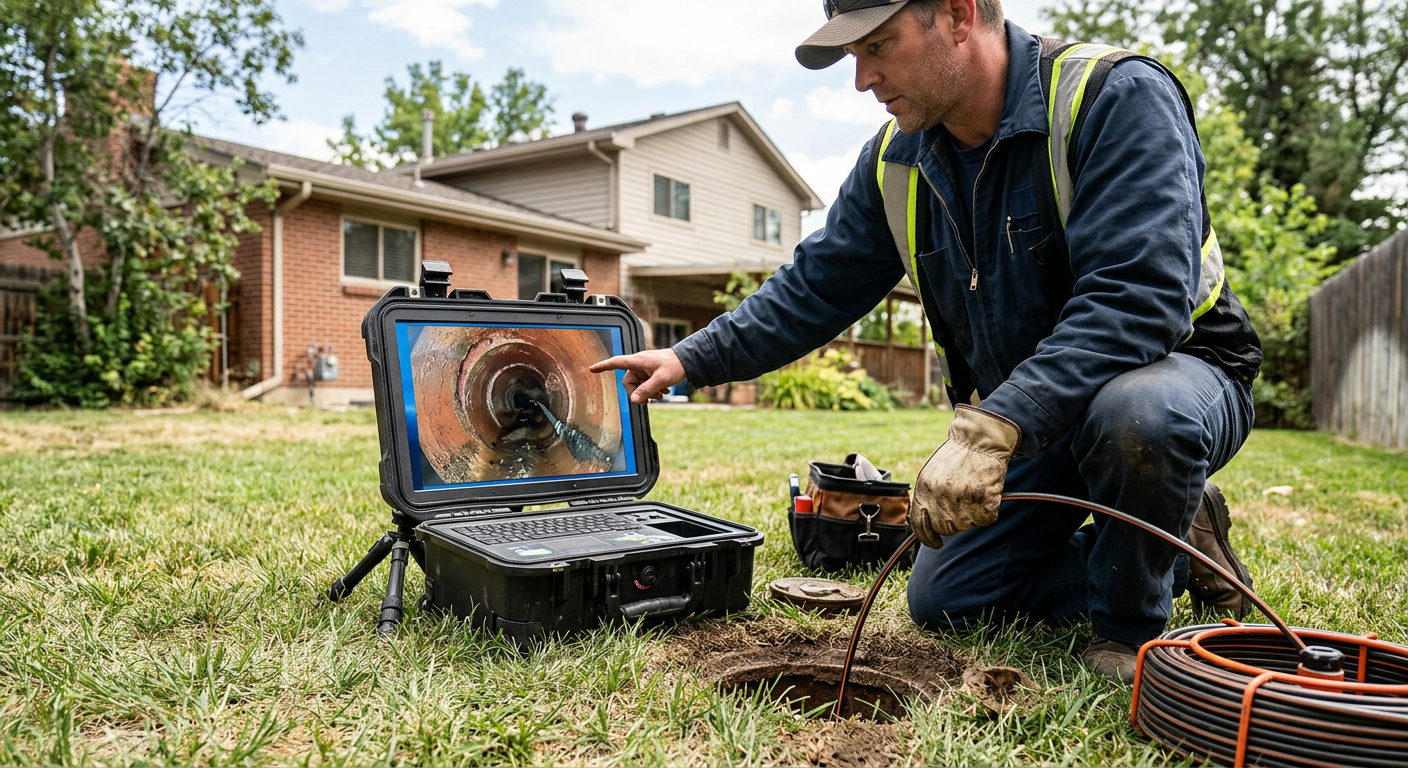
A detailed camera run identifies whether the blockage stems from soft organic accumulation, structural offsets, or foreign debris. Buyers frequently arrange a sewer scope before buying a house in established Centennial subdivisions to confirm whether the main line requires maintenance jetting or a complete structural overhaul before closing.
Addressing outdoor drainage networks, perimeter channels, and foundation collection pipes
Hydro jetting is also effective for clearing exterior yard drainage systems, french drains, and roof runoff conductors that accumulate silt and organic debris over time. While mechanical snakes can puncture thin-walled corrugated plastic tubing, smooth low-pressure water jetting flushes out fine pine needles, packed clay silt, and decomposed leaves without tearing the piping.
Maintaining a clear sump pump discharge line is critical during heavy spring snowmelt and summer thunderstorms across Centennial to prevent basement flooding. Similarly, routine flushing protects properties with dedicated storm drain installation systems by preventing sand and road debris from choking collection basins.
When recurring blockages indicate structural lateral failure instead of routine buildup
When a sewer line backs up repeatedly every few months despite professional cleaning, the underlying issue is typically structural pipe failure rather than standard debris accumulation. Vitrified clay pipes installed decades ago in Centennial often suffer from cracked bells, missing bottom inverts, or heavy shear breaks that catch paper and solid waste continuously.
- Persistent Joint Offsets: When soil shifting misaligns pipe sections, water drops over an internal ledge, creating an immovable dam where solid waste constantly snags.
- Pipe Bellies and Sags: Low sections in the lateral collect standing water, decelerating flow velocity and allowing solids to settle out of suspension.
- Collapsed Pipe Crowns: Heavy surface loads or invasive root expansion can crush older pipes, requiring structural trenchless relining or excavation rather than maintenance.
In scenarios where pipe sections have collapsed or suffered severe ground shear, a targeted clay sewer pipe replacement or modern trenchless repair is necessary to restore permanent flow reliability to the property.
Selecting hydro jetting vs snaking for long-term sewer lateral performance
Determining whether to use hydro jetting vs snaking comes down to balancing immediate blockage relief against long-term pipe cleaning performance in your Centennial home. Mechanical cabling provides a cost-effective remedy for acute, localized clogs, but high-pressure water scouring remains the gold standard for removing tree roots, mineral scale, and heavy grease accumulation throughout the entire lateral. Contact Aurora Drainage Service to evaluate your underground lines and recommend the safest, most effective drainage solution.
Where we work
Frequently asked questions
- Can hydro jetting break an older residential sewer pipe?
- Hydro jetting can worsen pre-existing pipe damage if the line has structural fractures, severe offset joints, or thin deteriorated walls. Aurora Drainage Service always conducts a sewer camera inspection first to verify that older vitrified clay or cast iron lines are structurally sound enough to tolerate high-pressure water.
- How often should a home sewer lateral be hydro jetted?
- Most residential sewer laterals in Centennial only require hydro jetting every two to three years if mature trees sit directly over the line. Properties without heavy root intrusion or commercial-grade grease loading rarely need jetting more than once every three to five years.
- Will snaking permanently remove tree roots from a sewer line?
- Mechanical snaking cuts a narrow path through tree roots to temporarily restore flow, but it leaves root stumps behind at the pipe joints. Because the root tips remain fed by moisture and nutrients, they typically regenerate within three to nine months unless sheared flush with high-pressure hydro jetting.
- Why does a main line backup happen immediately after running the washing machine?
- Washing machines discharge large volumes of water under pump pressure, which rapidly fills a partially clogged sewer main. When water cannot pass the obstruction downline, it pushes upward through the lowest available fixtures, such as basement floor drains or laundry tubs.
Real calls behind this advice
“We had a main sewer line backup and called On-Call Rooter. They arrived quickly, explained everything clearly, and used a camera to inspect the line before clearing the blockage. They got our main drain flowing again without trying to upsell us.”
Ousama
Main sewer line backup · 2 weeks ago
“Best experience ever with Fares. He explained the entire process and kept us in the loop before during and after the entire drain clean out process. And the State-of-the-art camera system to inspect our main line up to the street, was amazing to see the technology and the condition of our drain. Highly recommended. A+++++”
NS SuLeiman
Main line camera inspection · 2 months ago
Where Aurora Drainage Service works from
We dispatch across Aurora and the wider Denver metro, 24 hours a day. Call 720-779-4946 and a tech is usually rolling the same day.
5.0 (59 Google reviews) · Drainage service
Phone: (720) 779-4946
Hours: Open 24 hours
On-Call Rooter LLC drainage service on Google Maps — Aurora, CO